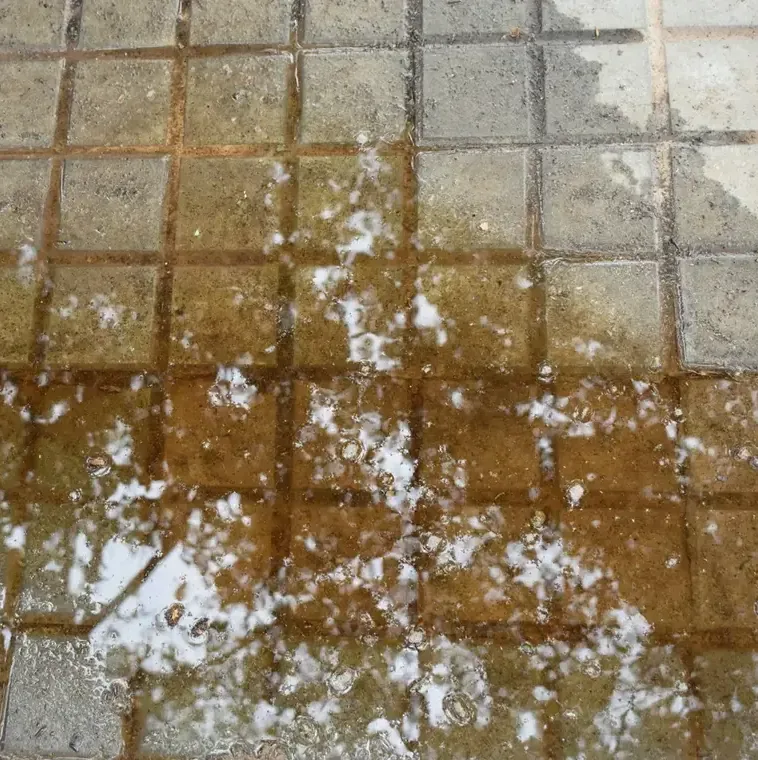
A slab leak does its damage out of sight, under the concrete, so the first clue is often a warm patch on the floor or a water bill that makes no sense. In Montclair, where postwar tract homes spread across the old citrus land, that hidden pipe is worth understanding before it fails.
Key takeaways
- A leak under the slab shows up as a warm patch on the floor, damp baseboards, a musty smell in one room or a meter that keeps turning with every fixture off.
- Postwar slab homes commonly carry copper supply pipe under the floor, and pinholes are the usual way that pipe fails.
- Closing the main shutoff valve stops new water, but the moisture already in the slab, flooring and wall bottoms still has to be dried.
- A plumber or leak specialist finds and repairs the pipe, while the restoration team handles the extraction, the flooring and the drying.
- A good part of the city's growth came as postwar tract housing, so a hidden pipe leak is a reasonable suspect when the signs appear.
Why a leak under the floor stays hidden
Montclair began as the Monte Vista tract, surveyed in 1900 and planted in citrus orchards through the first half of the 20th century.
After the war the orchards gave way to homes. The city was incorporated as Monte Vista in 1956, renamed Montclair in 1958, and its population climbed from 13,546 in 1960 to 22,546 in 1970.
Postwar slab homes commonly carry copper supply pipe under the floor. Over decades, tiny pinholes can open in that copper, and the water seeps into the concrete instead of dripping where anyone can see it.
That is why a slab leak is slow and quiet. By the time a stain appears, water may have been spreading beneath the floor for weeks.
The concrete soaks up water first, then pushes moisture sideways into whatever touches it: carpet edges, baseboards and the bottoms of walls.
Warning signs a homeowner can check
Most slab leaks announce themselves through small changes rather than a sudden flood. The signs usually show in one area first, along the path the pipe takes under the floor.
Signs inside the house
Walk the home slowly and compare rooms. The affected spot often feels different underfoot or smells different from the rest of the house.
- A warm spot on tile or concrete can mean a hot water pipe is leaking below it.
- Baseboards swell, stain or pull away from the wall.
- Carpet feels damp along one edge, or flooring lifts, cups or cracks.
- A musty smell lingers in a room with no other source of moisture.
- The sound of running water continues when every tap and appliance is off.
A simple meter test
Turn off every tap, appliance and irrigation timer, then watch the water meter dial for a few moments. A dial that keeps moving points to water escaping somewhere in the system.
A fitting that fails and sprays is a different problem, covered under burst pipe water damage, but the same meter test applies. A running toilet or a dripping faucet can also move the dial, so a plumber should confirm where the water is going before anyone tears into a floor.
First steps at home
Once a slab leak looks likely, the goal is to limit the water and protect what can still be saved.
- Close the main shutoff valve if the meter test shows water moving.
- Photograph damp areas, stains and the meter reading for the insurer or landlord.
- Lift rugs, boxes and furniture off the affected floor.
- Keep power strips and electronics away from damp flooring.
- Call a plumber to find the leak and a restoration team to start the drying.
Why speed matters once the water is off
Water sitting in a slab does not stay put. It wicks into wall bottoms, carpet pad and cabinet bases, and mold can start within 24 to 48 hours if the area stays wet.
That is the reason to begin water extraction and drying as soon as the supply is shut off. Waiting for the pipe repair to be finished gives the moisture more time to travel.
Who does what: the plumber and the restoration team
Finding and fixing the pipe
A plumber or leak detection specialist locates the failed section with pressure tests and listening equipment, then repairs it or reroutes the pipe.
The restoration team does not repair plumbing. Its job starts with the water the pipe has already released.
Drying the slab and walls
Wet flooring is pulled back and any standing or trapped water is extracted.
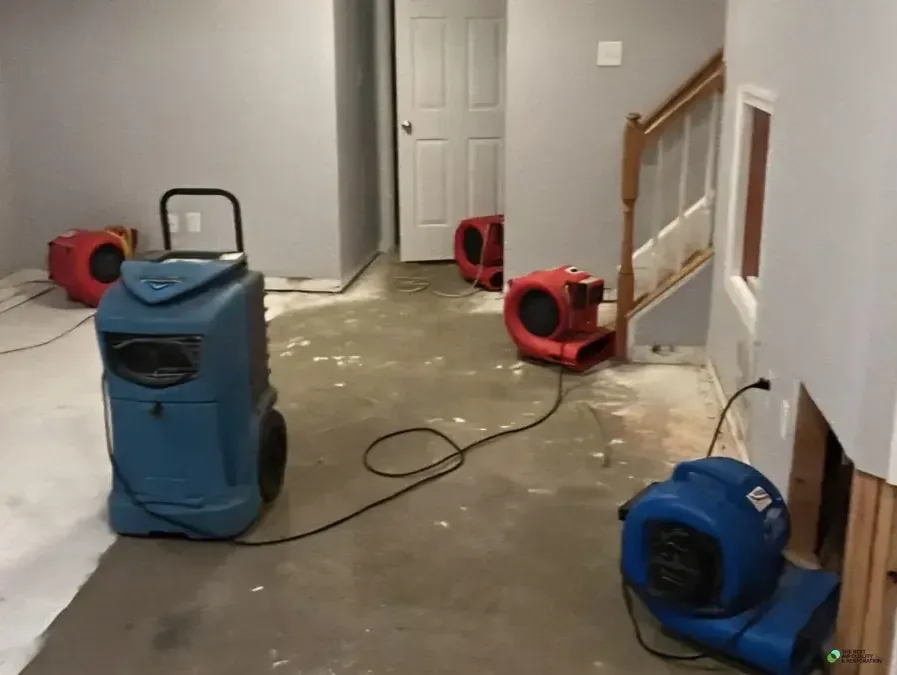
Then LGR dehumidifiers and air movers go to work on the concrete, the subfloor where there is one, and the bottoms of the wall cavities. Moisture readings are taken on each visit until the slab and walls reach normal levels.
This is the heart of structural drying, and a slab dries slowly, so patience and measured readings matter more than rushing the equipment out.
What usually comes out and what can stay
The materials that soak up water are the ones at risk. Hard surfaces often dry in place, while porous ones rarely do.
- Carpet and pad over the leak are commonly removed.
- Laminate and engineered boards often cup and have to be lifted.
- Tile and sealed concrete can usually be dried in place, though grout may need attention.
- Baseboards and the bottom strip of drywall may be cut away if they stay wet.
- Solid hardwood sometimes survives when drying starts early, but nothing about it is certain.
Owners, renters and who to tell
The 2020 housing count for the city was 10,816 units, with 54.8% owner occupied and 45.2% rented.
That split matters when a leak turns up. An owner decides on the repair and the claim, while a renter should tell the landlord in writing right away and keep dated photos.
Either way, the paper trail of meter readings, photos and moisture logs helps everyone involved agree on what happened and what the cleanup covered.
Questions
How can a homeowner tell a slab leak from a wall leak?
A warm patch, a meter that moves with everything off and dampness that follows a path across the floor point to the slab. A wall leak usually shows as a stain or bubbling on the wall above the floor. A plumber's pressure test settles it.
Does a pinhole leak cause much damage?
A pinhole lets water out slowly, but it can run for weeks without anyone noticing. A slow leak soaks flooring, wall bottoms and the slab itself, and the work grows the longer it runs.
Does the water stay off until everything is dry?
The main stays closed until the plumber isolates or repairs the failed section. After that, the home can have water again while the drying equipment keeps running.
Will the flooring need to be replaced?
It depends on the material and how long it stayed wet. Carpet pad and laminate usually go, while tile and sealed concrete often dry in place.
What should a renter do first?
Shut off the water if the meter shows a leak, photograph the damage and give the landlord or manager written notice. Then let the restoration team document the readings.