Water Damage Restoration Upland, CA
From a split supply pipe in a downtown storefront to winter rain coming through an attic, the drying team removes standing water, reads every wet surface and dries the building to a measured finish.
(888) 578-6508Have a drying crew sent to my address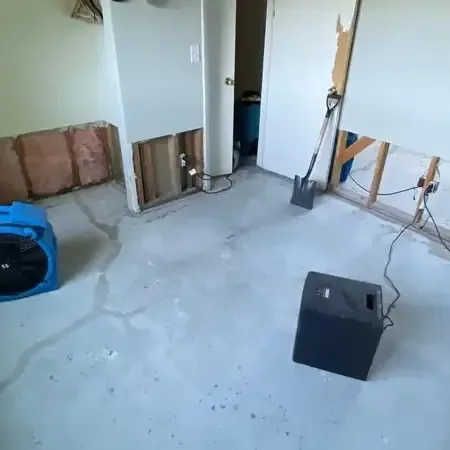
What to do first when water shows up inside
Close the water off
Turn the main shutoff or the small valve feeding the fixture that failed, then open a low faucet to relieve pressure.
Make the room safe
Cut power at the panel to any wet room if the panel area is dry, and keep cords and extension strips off the floor.
Record the damage
Before cleanup, take photos and short videos of the source, the water depth and every damaged item, room by room.
Raise what can be moved
Set rugs, books, electronics and small furniture on a dry surface, and slip foil under legs that must stay.
Avoid contaminated water
Water from a toilet, floor drain or outdoor runoff carries bacteria, so keep children and pets out and leave cleanup to the crew.
Water Damage Restoration Services in Upland, CA
Each of the twelve services below follows its own plan, whether the water came through a roof, out of a hose or up a drain.
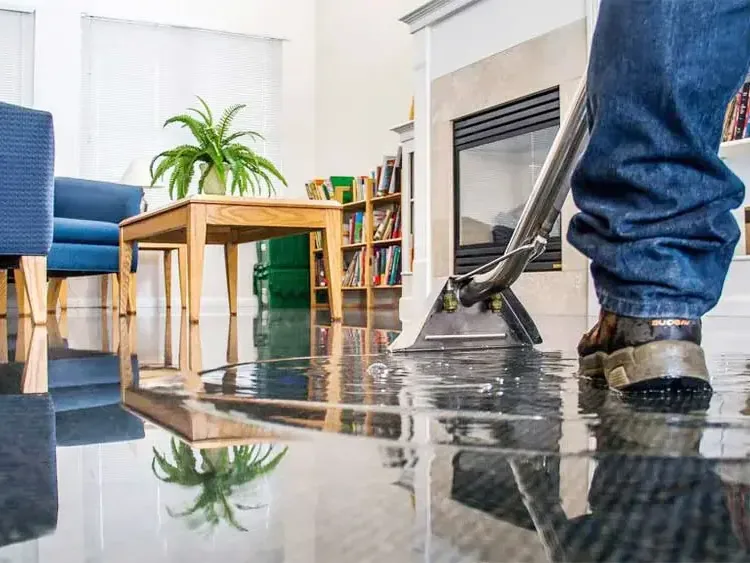
Water Extraction and Removal
Truck-mounted and portable extractors clear standing water from carpet, tile and concrete before drying equipment goes in.
Inside this service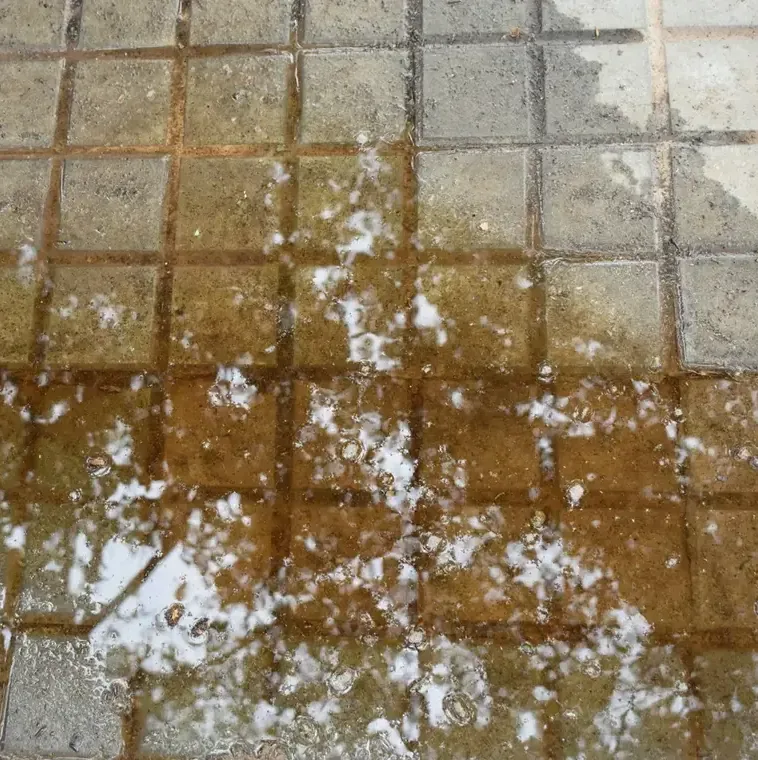
Slab Leak Water Damage
Water from a leak beneath a concrete floor traced through the flooring, then the slab and lower walls dried.
Inside this service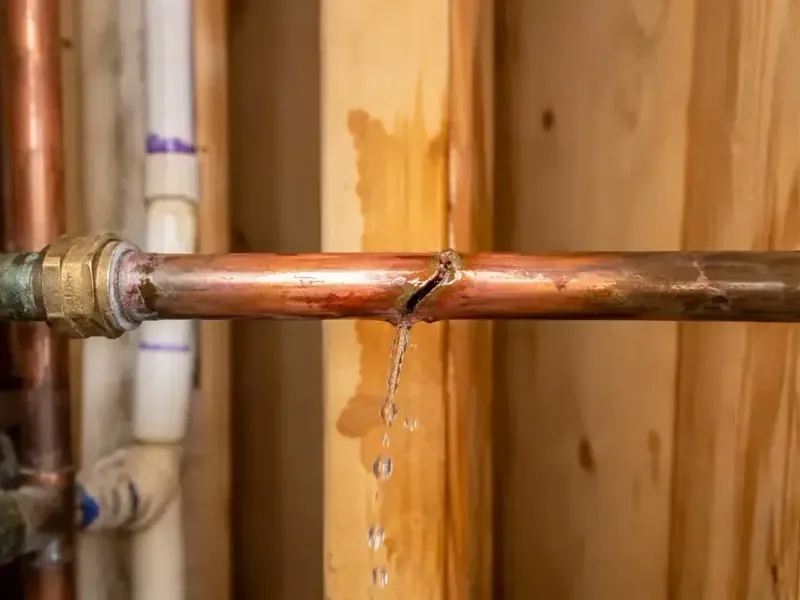
Burst Pipe Water Damage
A failed supply pipe or fitting inside a wall, with the wet cavity opened low and the framing dried.
Inside this service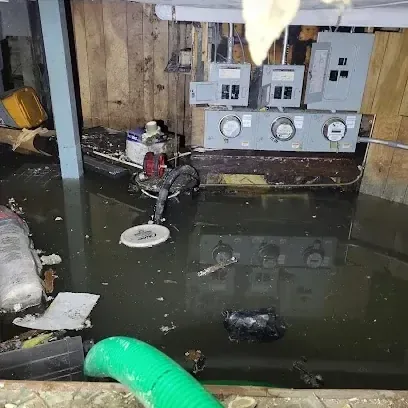
Sewage Backup Cleanup
Drain and toilet backups cleaned as Category 3 water, soaked porous materials removed and surfaces disinfected.
Inside this service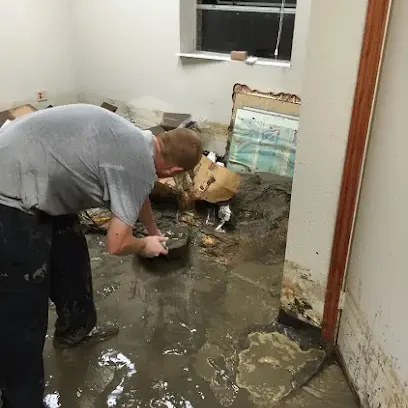
Storm Runoff and Flash Flood Cleanup
Rain runoff that reaches doors, garages and floors removed and treated as contaminated before drying starts.
Inside this service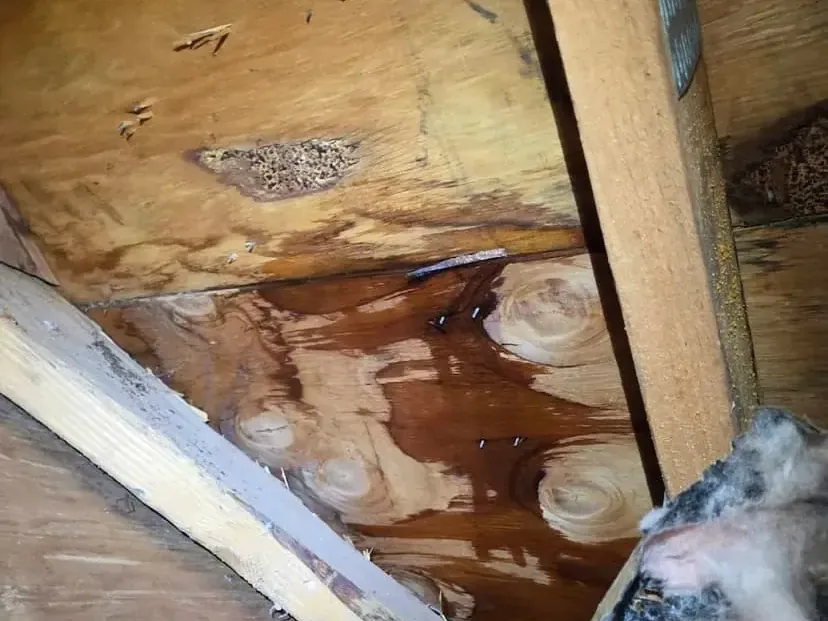
Roof Leak Water Damage
Winter rain coming through tile, shingles or flashing followed through the attic to the wet ceiling.
Inside this service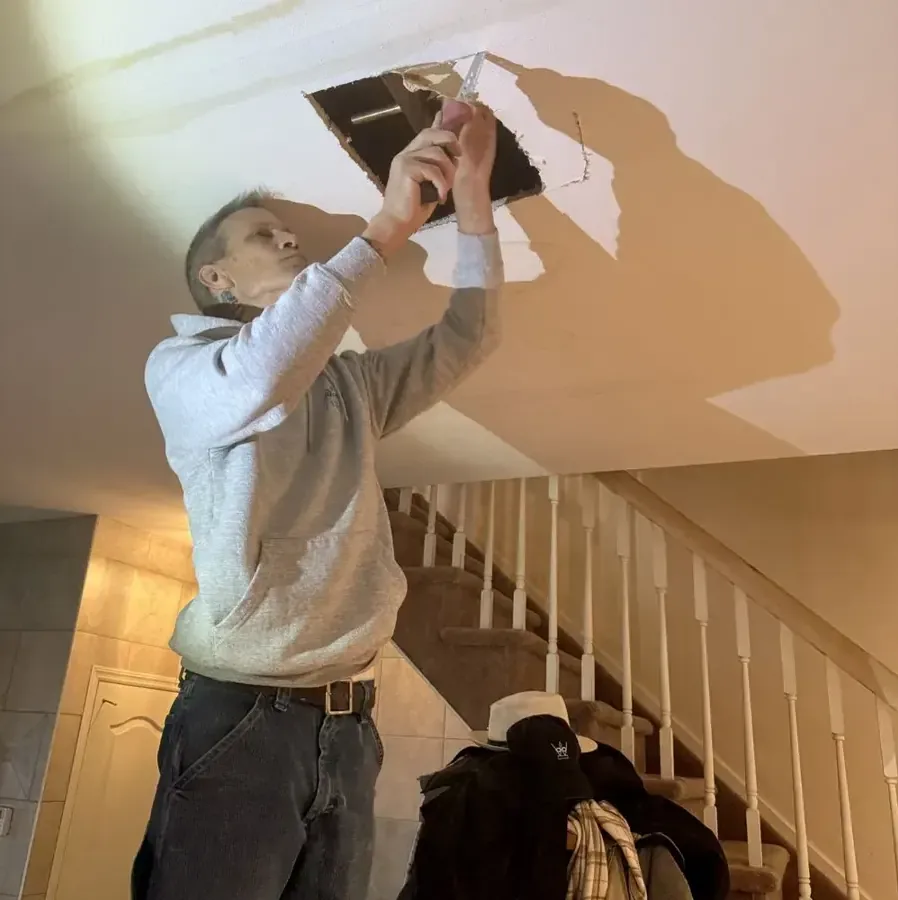
Ceiling Leak Water Damage
Leaks from an upstairs bathroom or the unit above found, the soaked ceiling opened and the joists dried.
Inside this service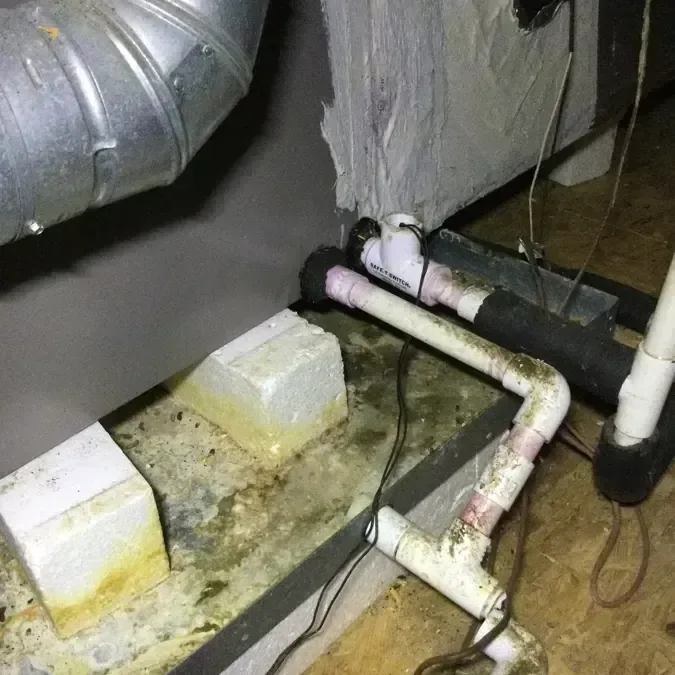
AC Condensate Leak Water Damage
Overflowing condensate pans and blocked AC drains above the ceiling cleaned up and the wet drywall dried.
Inside this service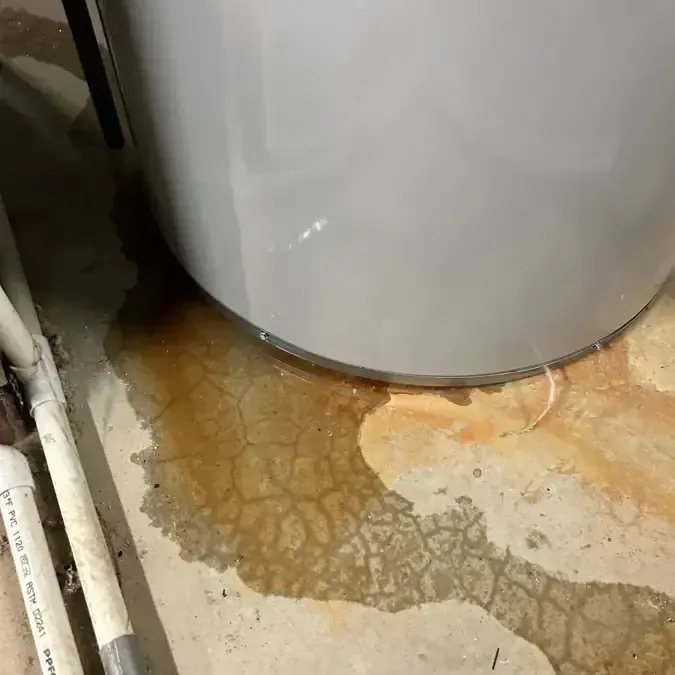
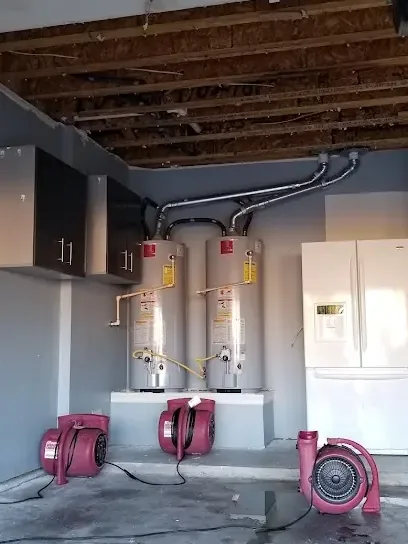
Water Heater Leak Cleanup
A tank or relief valve that let go, with the water pulled up before it reaches walls and storage.
Inside this service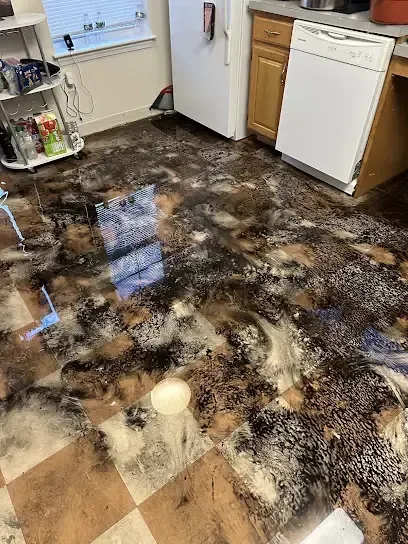
Appliance and Supply Hose Leaks
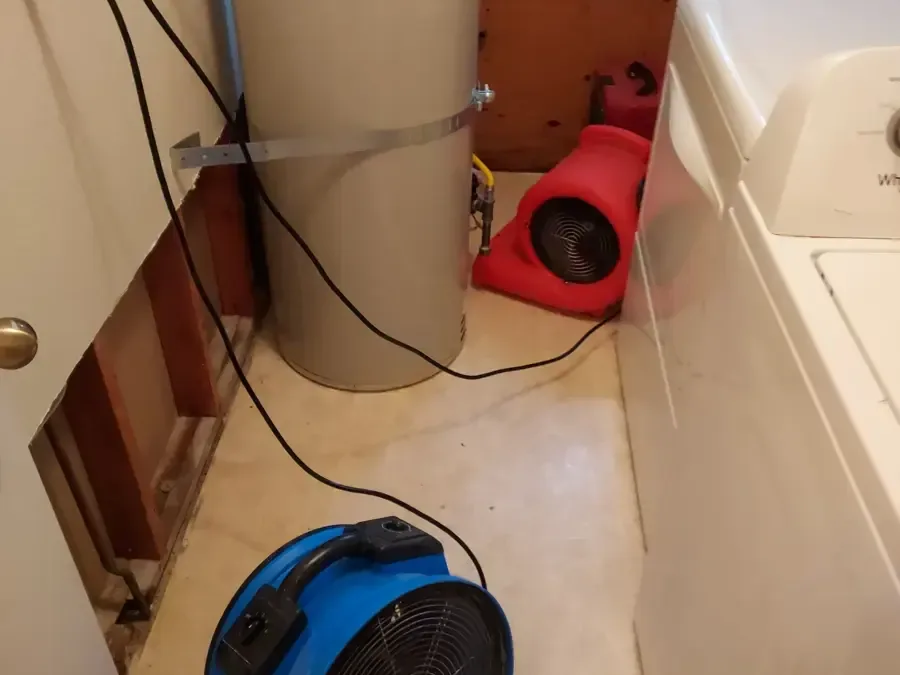
Washer, dishwasher and refrigerator leaks dried out from under cabinets, flooring and the walls behind them.
Inside this service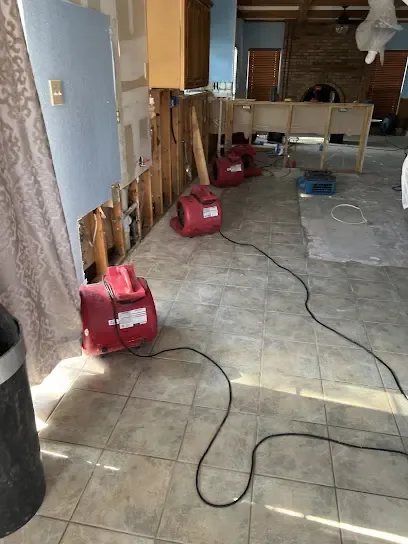
Structural Drying and Dehumidification
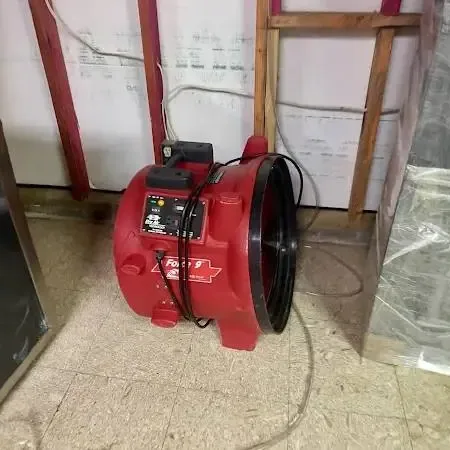
Air movers and LGR dehumidifiers matched to the class of loss and run until readings show the materials are dry.
Inside this service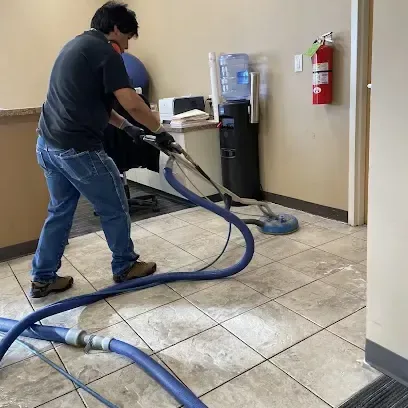
Commercial Water Damage
Downtown shops, restaurants, clinics and apartment buildings dried area by area to limit closed doors.
Inside this serviceReadings decide when a building is dry, not the calendar
Drywall, flooring and framing can feel dry to the touch while still holding enough water to swell, stain or smell later. Meters settle the question.
Response at any hour
Dispatch runs 24/7, weekends and holidays included, because standing water keeps moving into drywall, cabinets and flooring while it waits.
IICRC S500 method
Equipment is sized to the class of loss, and a dry reference reading from an untouched room sets the finish point for every wet material.
A file adjusters can use
Each visit adds moisture readings, humidity and temperature logs, and dated photos that show conditions before anything was removed.
Local conditions in mind
Winter rain, hard summer cooling loads and a large share of rented homes all change how a loss is reported, reached and dried.
Clean, gray and black water each get a different plan
Clean supply water
Water from a broken supply pipe, a tank or a slab leak starts out clean. Dried quickly, carpet, drywall and framing can usually stay in place.
Gray water with soap or residue
Washing machine discharge, dishwasher water and AC condensate carry soap, food or dust. Soaked carpet pad usually goes, and surfaces get an antimicrobial before drying.
Black water from drains and runoff
Toilet overflows, drain backups and rain runoff from outside count as Category 3 from first contact. Porous materials they touch are bagged out, not saved.
What makes water damage different in Upland
The city climbs from the valley floor toward the San Gabriel Mountains, gets most of its rain in winter and runs air conditioning hard through long summers, and each of those leaves a mark.
Winter-heavy rain
Most of the 24.5 inches of rain that falls in an average year arrives in the winter months, so roofs, gutters and door thresholds get tested all at once when the storms return.
Ground rising to the north
Elevation climbs from about 1,175 feet at the southern city boundary to about 2,000 feet at the northern edge, so storm runoff moves downhill toward lower streets, driveways and garages.
Long, hot cooling season
With a hot-summer Mediterranean climate, air conditioners run for months. A blocked condensate drain or rusted pan can soak a ceiling slowly before anyone sees a stain.
Many rented homes
The 2010 census found 42.1% of housing units occupied by renters, so a leak often involves both a tenant and an owner, and both need to hear about it quickly.
An older downtown core
The oldest part of the city, east of Euclid Avenue between 8th Street and Arrow Highway, was first known as Old Magnolia. Shops and upstairs units there share walls and ceilings.

July 2006 heat record
The city recorded its highest temperature on record, 113 F, a reminder of how hard cooling systems and their condensate drains work during peak summer heat.
Four stages between a wet room and a dry one
The IICRC S500 standard spells out how restoration crews classify water, size drying equipment and confirm that wet materials are truly dry, using meter readings instead of a hand on the wall.
A technician finds the source, assigns the water category and class, and sketches a moisture map of each wet floor, wall and ceiling before setup.
Extractors pull standing water and squeeze what they can from carpet and pad, which cuts the number of drying days more than any other step.
Air movers sweep wet surfaces while LGR dehumidifiers take the moisture out of the air, and every reading is written down on each visit.
Equipment leaves once framing, drywall and concrete read within 2 to 4 points of the dry reference, and those last numbers go into the file.
What goes into a solid claim file
Insurers usually treat water escaping a pipe or appliance inside the home differently from runoff entering from outside. Good records help either way.
- Moisture map covering each wet room, wall and ceiling
- Psychrometric logs of temperature and humidity for every visit
- Dated photos taken before anything is cut or removed
- The water category and class of loss in writing
- An itemized scope of removed materials and the reason
Read your own policy
Standard homeowner coverage often handles a sudden pipe or appliance failure, while water that enters from outside during a storm usually falls under a separate flood policy.
Only your insurer decides coverage. Look over the water damage and sewer backup sections of your policy and report the loss as soon as possible.
Where crews work across Upland, street by street
ZIP codes
Unsure whether a crew can get to your address?
Crews cover all three ZIP codes in town, from the older blocks east of Euclid Avenue to homes and apartments near Foothill Boulevard and the State Route 210 corridor.
The same equipment and paperwork reach neighboring cities too, so a property across the border in Montclair or Ontario is handled the same way.
Upland, CA · [email protected]
Areas and corridors
Nearby cities
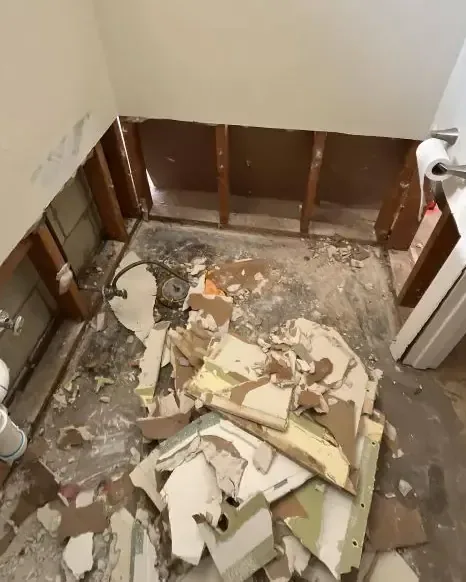
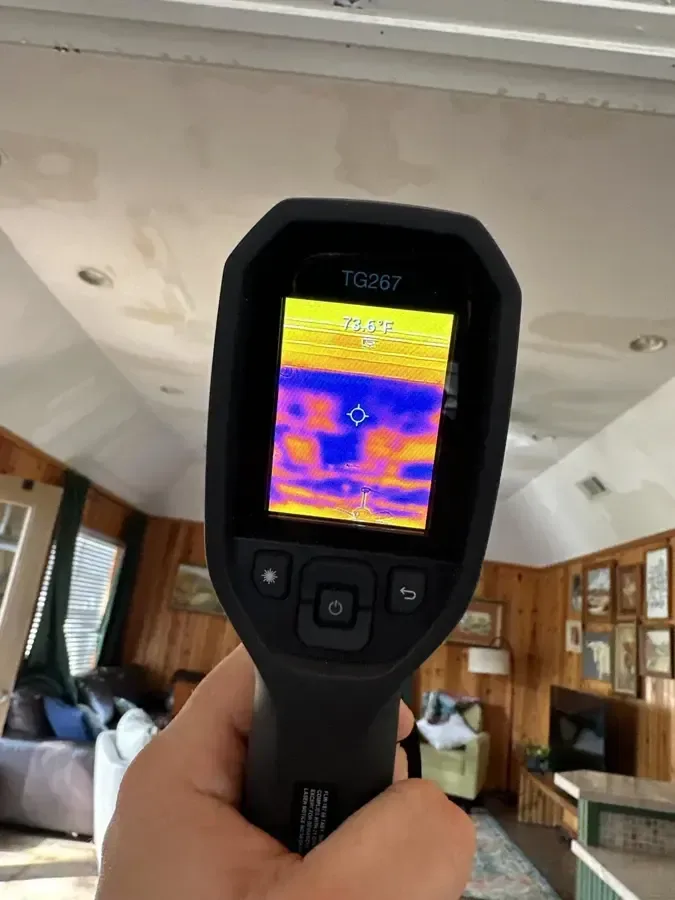
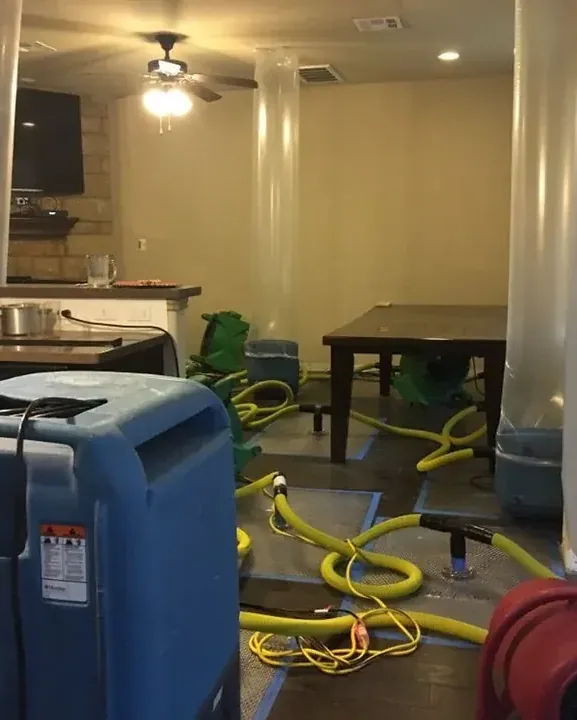
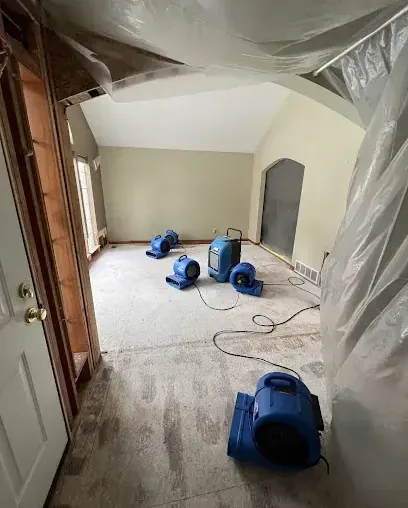
Photos of water damage work from the first extraction to the final moisture check
What does water damage restoration cost in Upland, CA?
Typical water damage restoration in Upland, CA falls between $900 and $6,500. A single wet room with clean water stays near the bottom, while sewage, wet hardwood or a whole floor of damage can climb to $15,000 or more.
- Leak stopped and water extracted early
- Pad, baseboards and lower wall checked
- Roughly three to four days of equipment
- Flooring pulled back to reach wet concrete
- Lower drywall opened where readings stay high
- Containment with LGR dehumidifiers
- Category 3 cleanup with antimicrobial
- Pad, drywall and insulation removed
- Drying that can run past a week
The final number depends on four things: which water category it is, the square footage that got wet, the materials involved and how quickly drying began after the leak.
Price out a loss on the cost calculator ›Upland water damage questions and straight answers
01How soon can a crew reach a home in Upland?
Water inside is handled as urgent around the clock, including weekends and holidays. Dispatch sends the closest available crew with extraction gear and meters, and the inspection begins as soon as the crew is through the door.
02What helps most while waiting for the crew?
Stop the water at the main or the fixture valve, shut off power to wet rooms from a dry spot, take photos before moving anything, and lift electronics and rugs off the floor. Leave toilet or runoff water to the sewage backup cleanup crew.
03Will homeowners insurance pay for the damage?
A sudden failure inside the home, such as a burst supply pipe or a leaking tank, is often covered. Rain or runoff from outside usually needs a flood policy. Only your insurer can say, so review your own policy.
04Which water problems come up most often here?
Winter rain finding its way through roofs and thresholds, AC condensate leaks during hot summers, failed supply hoses and tanks, and leaks between stacked units in rented buildings account for many of the calls.
05How many days does drying usually take?
A clean-water loss that gets extracted quickly usually dries in three to five days. A slab leak under concrete, hardwood and sewage jobs run longer. The equipment stays until each material reads within 2 to 4 points of the dry reference.
06What does IICRC S500 mean for my home?
It is the restoration industry's standard for drying water damage. It defines water categories and classes, how much equipment a room needs and how to prove a material is dry, which gives your adjuster real numbers.
07Does wet drywall always need to be cut out?
Not always. Drywall wet with clean water and dried fast can often stay. It is cut when contaminated water touched it, when it sags or crumbles, or when soaked insulation sits behind it, and usually only near the floor.
08Why does sewage cleanup take extra steps?
Sewage is Category 3 water carrying bacteria. Crews suit up, remove porous materials it touched such as carpet, pad and lower drywall, and apply an EPA-registered antimicrobial for its full dwell time before any drying starts.
09How is the price of the job worked out?
Price follows the scope: the water category, the square footage affected, the materials involved and the number of drying days the readings require. The cost calculator gives a typical starting range.
10Can household fans dry the house out instead?
Box fans and small dehumidifiers dry the surface but leave water inside framing, concrete and wall cavities. Without meter readings, a room can look finished while the structure underneath stays damp for weeks.
Water inside an Upland home or business? Get the drying crew started.
The longer water sits, the further it travels into floors, walls and cabinets. Dispatch runs 24/7.
(888) 578-6508Get water out of my building