Structural Drying and Dehumidification in Upland, CA
A floor that feels dry can still hold water in the subfloor, framing and lower drywall. The drying team places air movers and dehumidifiers and checks readings until every material reaches its target.
(888) 578-6508Get the structure dried and measured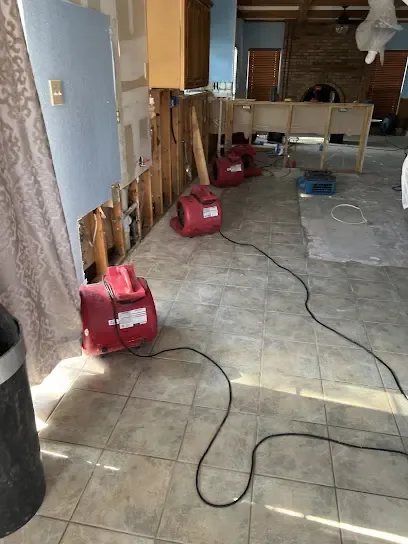
Water that has been pumped out is not the end of a water loss. Moisture left in framing, subfloor and drywall keeps damaging a house, and it can support mold growth after 24 to 48 hours, so drying has to be controlled and measured.
First steps for structural drying and dehumidification in Upland
Stop new water
Fix or shut off the source before drying begins.
Clear the floor
Move furniture and rugs so equipment reaches every surface.
Keep equipment running
Leave the machines on until the readings say stop.
Keep a log
Write down readings and dates for the claim.
What structural drying actually does
The goal is to bring wet materials back to the moisture level of similar dry materials in the same house. Meters and thermal cameras find the wet spots, and the drying team sets equipment so air moves across them while humidity stays low.
- Meter readings on every wet surface
- Thermal scans for hidden moisture
- Air movers placed along wet walls
- Dehumidifiers sized to the space
Water spreading while you read?
Structural drying and dehumidification in Upland removes moisture from framing, subfloor and drywall using air movers, dehumidifiers and moisture readings, so materials return to dry targets before any rebuilding begins.
Equipment and what each piece does
Air movers push dry air across floors and wall bases, and dehumidifiers pull the released moisture out of the room. Removing baseboards or drilling small holes lets air reach wall cavities without tearing out sound drywall.
- Air movers for surface drying
- Dehumidifiers for the moisture
- Baseboards removed for air flow
- Small holes to vent wall cavities
How the end of drying is decided
Readings are taken at each visit and compared with the dry reference. When every material reaches its target, the equipment leaves, and the log of readings becomes the record an insurer or builder can use.
- Daily readings logged
- Equipment adjusted as areas dry
- Targets set by material type
- Final readings written down
Official reading: EPA indoor air quality basics and Energy Saver from the Department of Energy.
What does structural drying and dehumidification cost in Upland, CA?
Structural drying in Upland usually costs $1,000 to $6,000 and up, depending on how many rooms are wet and how dense the materials are. Hardwood and heavy subfloors take longer and cost more than a single carpeted room.
- Air movers placed
- One dehumidifier
- Readings each visit
- Multiple dehumidifiers
- Baseboards removed
- Wall cavities checked
- Specialty floor drying
- Longer equipment run
- Detailed drying log
Ranges are typical, not a quote: water category, square footage, material class and how fast drying started move the number most.
Work out your own range on the cost calculator ›How structural drying and dehumidification is handled in Upland
Every job starts with a moisture map, so the drying plan matches what is actually wet. Equipment stays until the readings say dry, not until the surface looks dry.
Measure
Readings set the starting point.
Place
Air movers and dehumidifiers go in.
Monitor
Readings are taken at every visit.
Release
Equipment leaves once targets are met.
Structural drying and dehumidification across Upland and nearby cities
Structural drying covers every part of the city, from homes near Historic Downtown Upland and Old Magnolia to streets along Foothill Boulevard and Arrow Highway, in ZIP codes 91784, 91785 and 91786. See all water damage services.
The same service nearby: structural drying and dehumidification in Montclair, Rancho Cucamonga, Ontario.
Structural Drying and Dehumidification questions in Upland, CA
01How long does structural drying take?
It varies with the materials, the amount of water and the equipment, and no schedule fits every job. Readings at each visit show the trend, and drying ends only when targets are met, after water extraction has removed the standing water.
02Why are there so many loud machines?
Air movers push air across wet surfaces while dehumidifiers pull the moisture out of the air. Together they move more water than any one machine, which is why a single wet room may have several units.
03Can the house be dried without opening walls?
Sometimes. Small holes or pulled baseboards let air reach wall cavities. Where readings stay high or insulation is soaked, that section is cut out so it can dry or be replaced.
04What does the drying log show an insurer?
It shows readings, dates and equipment counts, which proves the home was dried to standard. Many insurers ask for it before paying for rebuilding.
05Can the machines be turned off at night?
It is better not to. Drying works only while air is moving and moisture is being removed, and switching units off slows progress. If noise is a problem, the crew can adjust the setup.
Dry the structure of your Upland home properly
Moisture left in framing and drywall keeps causing damage after the puddles are gone. Help is available 24/7 for drying and readings.
(888) 578-6508Start measured drying