Structural Drying and Dehumidification in Ontario, CA
Housing here runs from the World War II era boom to newer Ontario Ranch construction, so drying is planned from readings, airflow and dehumidification rather than from any assumption about how a house was built.
(888) 578-6508Plan the drying from readings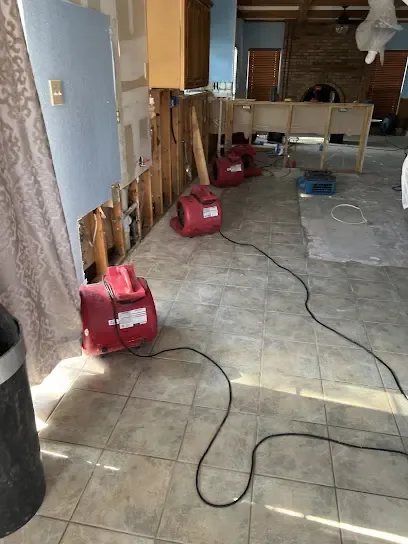
Drying is a measurement job. Wet framing, subfloor and drywall look fine long before they are dry, and surfaces that feel dry can still be giving off moisture that feeds damage inside the wall. Equipment stays until the numbers say it can leave.
First steps for structural drying and dehumidification in Ontario
Stop the source
Make sure the leak is fixed and extraction is finished first.
Keep equipment running
Leave air movers and dehumidifiers on until readings say stop.
Keep doors closed
A closed room lets dehumidifiers work on one space.
Expect daily visits
Readings are taken each day.
Planning the setup
The team takes readings in affected and unaffected rooms to set a dry goal for that building. Air movers are placed to cross every wet surface, and dehumidifiers are sized to the volume of air being dried. Sealing the room with plastic keeps the dehumidifier working on one space.
- Readings in wet and dry rooms
- Air movers across wet surfaces
- Dehumidifiers sized to the room
- Containment where air must be sealed
Water spreading while you read?
Structural drying and dehumidification dries framing, subfloor, drywall and contents after water damage, using air movers, dehumidifiers and daily moisture readings until the whole structure matches a dry reference.
Daily checks
Equipment is checked each visit. Readings are logged, air movers are repositioned as areas dry out, and any pocket that stays wet is opened up, because trapped moisture behind a baseboard will not dry by itself.
- Logged readings each visit
- Air movers moved as areas dry
- Wet pockets opened for access
- Equipment removed only at the goal
Where drying fits with other work
Drying follows extraction in almost every job, and it is what separates a finished repair from a hidden problem. Extraction is covered under water extraction, and sewage jobs add cleaning steps before drying under sewage backup cleanup.
- Carpet and pad dried or replaced
- Hardwood and tile checked for cupping
- Cabinets dried from the base
- Insulation replaced when soaked
Official reading: EPA indoor air quality basics and Energy Saver from the Department of Energy.
What does structural drying and dehumidification cost in Ontario, CA?
Structural drying and dehumidification in Ontario typically costs $1,000 to $6,000 or more, based on how many rooms need equipment, the drying class and the number of days the readings call for. Dense materials like hardwood and concrete take longer.
- Meter survey
- Air movers and dehumidifier
- Daily readings
- Multi room equipment
- Wet baseboards opened
- Added dehumidifiers
- Specialty drying equipment
- Extended drying days
- Final dry confirmation
Ranges are typical, not a quote: water category, square footage, material class and how fast drying started move the number most.
Work out your own range on the cost calculator ›How structural drying and dehumidification is handled in Ontario
Every job starts with a moisture map, so the drying plan matches what is actually wet. Equipment stays until the readings say dry, not until the surface looks dry.
Survey
Meters set the dry goal.
Place
Air movers cross wet surfaces.
Monitor
Readings are logged daily.
Release
Equipment leaves at the goal.
Structural drying and dehumidification across Ontario and nearby cities
Structural drying runs wherever water has reached framing, subfloor or drywall, from homes around Euclid Avenue to the newest Ontario Ranch streets, and in warehouses and shops with large wet floors. Equipment is sized to each space.
The same service nearby: structural drying and dehumidification in Montclair, Chino, Upland.
Structural Drying and Dehumidification questions in Ontario, CA
01How does the crew know when a building is dry?
Readings in affected materials are compared with readings from unaffected rooms in the same building. The job is complete when the wet areas match that dry reference.
02Why do dehumidifiers run for days?
Materials like drywall, framing and subfloor release moisture slowly. Dehumidifiers collect it from the air as it comes out, and stopping early lets it soak back in.
03Can a home be lived in during drying?
Usually yes, though equipment is loud and runs around the clock. Some rooms may be sealed with plastic, and sewage jobs require staying out until cleaning is finished.
04Will hardwood floors survive?
Often, when drying starts early. Hardwood can cup as it absorbs water, so specialty equipment and quick extraction improve the odds, but boards that warp badly may need replacing.
05Why is speed important with drying?
Materials that stay wet for 24 to 48 hours risk mold, so equipment goes in quickly. Faster drying also means fewer materials need to be torn out and replaced.
Wet framing in an Ontario house? Get readings and equipment going.
Surfaces that feel dry can still hold water inside walls and subfloor. Call now and the drying team sets the equipment to the readings, not to a guess.
(888) 578-6508Ontario structural drying help