Water Extraction in Ontario, CA
Measurable rain falls on 35.5 days a year, and a failed supply pipe needs no storm at all. The extraction crew removes standing water first, then dries what it reached.
(888) 578-6508Get the water pulled out now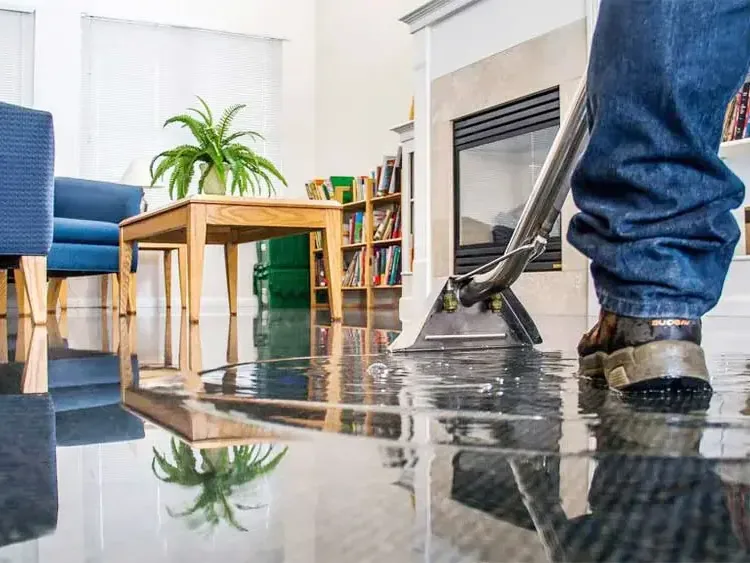
Standing water does the most harm in the first day, when it moves into baseboards, soaks carpet pad and starts working into subfloor seams. Extraction takes priority over everything else because drying equipment cannot keep up with a wet floor.
First steps for water extraction and removal in Ontario
Stop the source
Close the valve or fixture feeding the water before any extraction starts.
Cut power nearby
Turn off breakers for wet rooms and keep out of standing water near outlets.
Lift valuables
Move rugs, electronics and paper goods to dry ground.
Call for extraction
Describe the water source and the affected rooms.
Where the water comes from
Winter storms, a failed supply pipe or a split hose all put water on the floor, and rainfall averages 11.64 inches a year in town. The source decides how the water is handled, so the crew sorts it first. When drains are involved, see sewage backup cleanup.
- Clean water from supply pipes and tanks
- Gray water from washers and dishwashers
- Black water from sewers and storm runoff
- Mixed water, handled as contaminated
Water spreading while you read?
Water extraction and removal clears standing water from floors, carpet and pad with wands, pumps and truck mounted units, which stops the spread and prepares the structure for drying.
How the extraction is done
Wands and a pump pull the bulk of the water, truck mounted units reach large floors, and a pass over carpet squeezes out what the pad holds. Wet vacuums finish corners and thresholds.
- Pump and wand pass over open floor
- Weighted carpet tool to pull pad water
- Wet vacuum at corners and thresholds
- Pad cut and lifted when it cannot dry
What happens after the water is gone
An empty floor is not a dry one. Moisture stays in subfloor, baseboards and the bottom of drywall, so the drying team sets air movers and dehumidifiers and returns to the readings until they match the unaffected rooms. See the structural drying details.
- Air movers aimed at wet surfaces
- Dehumidifiers to pull moisture from the air
- Daily readings to track the drop
- Photos and logs saved for the claim
Official reading: EPA indoor air quality basics and California Department of Insurance.
What does water extraction and removal cost in Ontario, CA?
Water extraction in Ontario typically costs $900 to $7,500 or more, depending on how many rooms are wet, whether the water is clean or contaminated, the materials involved and how much drying the structure needs afterward.
- Pump and wand extraction
- Carpet pad drained
- Starter drying equipment
- Extraction across rooms
- Baseboards pulled where wet
- Multiple drying setups
- Truck mounted extraction
- Contaminated pad removed
- Daily readings until dry
Ranges are typical, not a quote: water category, square footage, material class and how fast drying started move the number most.
Work out your own range on the cost calculator ›How water extraction and removal is handled in Ontario
Every job starts with a moisture map, so the drying plan matches what is actually wet. Equipment stays until the readings say dry, not until the surface looks dry.
Assess
Water type and spread are mapped with meters.
Extract
Pumps, wands and truck units clear standing water.
Dry
Air movers and dehumidifiers pull out what remains.
Verify
Readings confirm the structure matches dry areas.
Water extraction and removal across Ontario and nearby cities
Water extraction work covers houses and apartments near Euclid Avenue and in Ontario Ranch, as well as shops, offices and distribution buildings elsewhere in the city. Wands and pumps handle single rooms, and truck mounted units come out when a whole floor is wet.
The same service nearby: water extraction and removal in Montclair, Chino, Upland.
Water Extraction and Removal questions in Ontario, CA
01How quickly does standing water need to come out?
As soon as possible. Water spreads into baseboards and pad quickly, and materials that stay wet for 24 to 48 hours risk mold, so extraction goes first and drying follows right behind it.
02Can wet carpet be saved after extraction?
Often yes when the water was clean and extraction began promptly. Padding is usually the first thing replaced, since it holds water and is cheap to swap. Hard flooring is usually fine.
03What if the water came from a sewage backup?
Contaminated water is handled differently: porous materials come out and surfaces are disinfected. That work is described under sewage backup cleanup.
04Does extraction include drying?
Extraction removes the standing water. Drying with air movers and dehumidifiers follows, usually as part of the same job, because wet framing and subfloor stay damp after the surface is clear.
05Is a rainstorm covered differently from a pipe leak?
The extraction is the same, though storm runoff is treated as contaminated while a leaking pipe starts out clean. Coverage depends on the policy, so the adjuster should be told the source.
Wet floors in an Ontario home? Get the water pulled out.
Every hour that water sits, it moves deeper into walls and subfloor. Call now and extraction can begin with the right equipment.
(888) 578-6508Call for extraction