Structural Drying and Dehumidification in Chino, CA
After the standing water is gone, framing, subfloors and wall cavities still hold moisture. The drying team sets air movers and dehumidifiers and keeps them running until the readings say the structure is dry.
(888) 578-6508Ask about damp walls and floors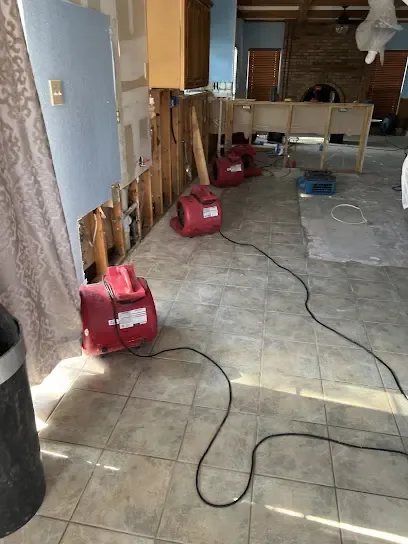
Structural drying begins once the standing water is gone, because framing, subfloors and wall cavities still hold moisture that cannot be seen. Chino has long hot summers and about 9.98 inches of rain a year, so a drying plan has to account for both indoor humidity and wet weather.
First steps for structural drying and dehumidification in Chino
Keep doors closed
Closed rooms let dehumidifiers pull moisture from the air.
Leave equipment on
Air movers and dehumidifiers should run without pause.
Keep cords clear
Do not unplug or move equipment between visits.
Note changes
Report any new damp spots or smells to the crew.
How the equipment dries a structure
Air movers push dry air across wet surfaces, and dehumidifiers pull the vapor out of the room. The two work as a pair inside a closed space, which is why doors and windows stay shut.
- Air movers across floors and wall bases
- Dehumidifiers to lower humidity
- Closed doors and windows
- Equipment moved as areas dry
Water spreading while you read?
Structural drying removes the moisture that extraction leaves behind in framing, subfloors and walls, using controlled airflow and dehumidification, and it ends when readings match dry reference materials.
What gets measured
Meters read moisture inside drywall, framing and subfloors, and a hygrometer tracks humidity in the air. Each visit adds readings, and the equipment is adjusted to follow where moisture remains. Readings from unaffected rooms set the dry standard for comparison.
- Moisture content in wood and drywall
- Humidity and temperature in the room
- A dry reference reading for comparison
- Photos of equipment placement
Light jobs and heavy jobs
A room with little wet material is a Class 1 or 2 job, while dense floors such as hardwood need Class 4 drying with specialty equipment. Water that started as a leak, as in slab leak water damage, often takes longer to clear.
- Class 1 or 2: light or moderate wetting
- Class 4: dense floors and deep moisture
- Mold risk falls as readings drop
Official reading: EPA indoor air quality basics and Energy Saver from the Department of Energy.
What does structural drying and dehumidification cost in Chino, CA?
Structural drying in Chino usually costs $1,000 to $2,500 for one room at Class 1 or 2, $2,500 to $4,500 for several rooms and $4,500 to $6,000 or more for slab or hardwood at Class 4.
- Air movers and a dehumidifier
- Moisture mapping
- Daily readings
- Multi-room equipment
- Wall cavity drying
- Dry sign-off
- Specialty drying equipment
- Extended monitoring
- Full documentation
Ranges are typical, not a quote: water category, square footage, material class and how fast drying started move the number most.
Work out your own range on the cost calculator ›How structural drying and dehumidification is handled in Chino
Every job starts with a moisture map, so the drying plan matches what is actually wet. Equipment stays until the readings say dry, not until the surface looks dry.
Map
Meters and a camera show wet areas.
Set
Equipment goes where moisture remains.
Monitor
Readings steer equipment changes.
Release
Equipment leaves once readings are dry.
Structural drying and dehumidification across Chino and nearby cities
The drying team sets up equipment in houses, rentals and commercial suites across Chino, in both ZIP codes, from streets near the Pomona Freeway to The Preserve at Chino. Browse the full service area or the town hub.
The same service nearby: structural drying and dehumidification in Montclair, Ontario, Upland.
Structural Drying and Dehumidification questions in Chino, CA
01How long does structural drying take?
It depends on the materials and how much water there was. Drywall and carpet dry sooner than hardwood or concrete, and the equipment stays until readings match dry references, not until a set number of days passes.
02Why are the fans and dehumidifiers both needed?
Air movers lift moisture off wet surfaces, and dehumidifiers remove it from the air. Running only fans just moves humidity around the room, which can wet other materials.
03Can wall cavities dry without opening them?
Sometimes. Small holes or removed baseboards can let air into the cavity, and readings tell whether drywall must come off. The crew opens the least amount needed to dry the framing.
04What does the dry sign-off include?
Final readings compared with a dry reference, photos of the finished areas and a log of the equipment and visits. Those records go to the owner or the insurer.
05What happens if drying is skipped?
Moisture left in framing and subfloors can warp wood, loosen finishes and let mold start. Drying stops that, and water extraction comes first when standing water is present.
Hidden moisture stays in the structure after the cleanup
Tell the drying team which rooms were wet and how long ago, and the equipment plan can be built around the readings.
(888) 578-6508Set up the drying equipment