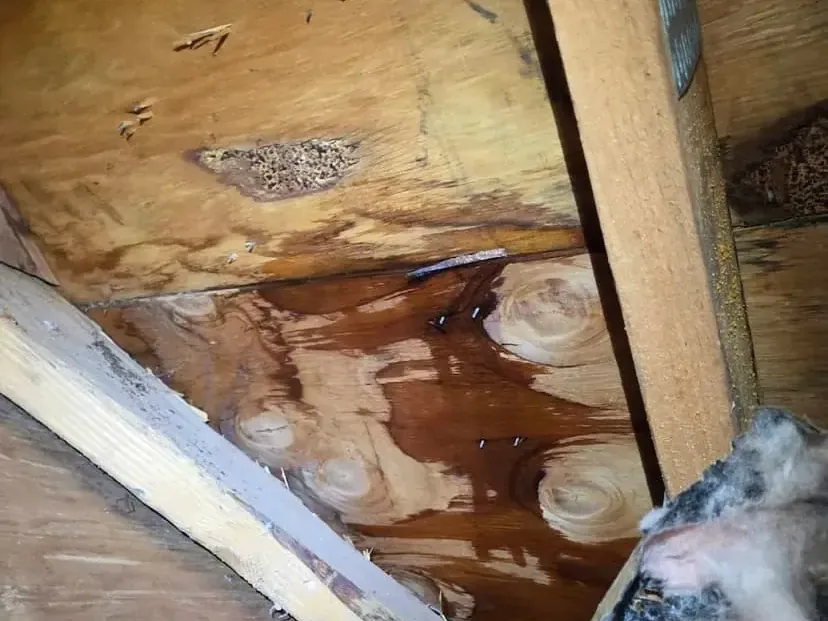
Rancho Cucamonga spends the summer nearly dry and then gets most of its rain in a few winter months. A roof that has not seen water since spring has not been tested at all.
Key takeaways
- Rancho Cucamonga averages 17.68 inches of rain a year, spread over about 43.8 rainy days.
- Summer is dry: June averages 0.21 inch, July 0.07 inch and August 0.04 inch, so roofs go months without a real test.
- January averages 4.16 inches and February 5.14 inches, the two wettest months.
- Check the roof surface, flashing and attic before the first storm, and ceilings and corners afterward.
- A stain that dries on its own can return with the next storm, so wet insulation and drywall should be dealt with, not ignored.
A dry summer leaves a roof untested
From June through September the city averages 0.21, 0.07, 0.04 and 0.25 inch of rain. That is close to none.
Then the pattern flips. December averages 1.42 inches, January 4.16, February 5.14 and March 2.70.
Months of sun, heat and dry air can crack sealant, lift edges and loosen flashing. The first heavy storm is often the first time the roof meets real water.
The city also averages 287 sunny days a year, so roofing materials spend most of their life baking in the sun.
Summer dust and debris pile up in valleys and gutters, and the first storm washes it toward drains that can clog.
That is also why leaks tend to show up at the start of the wet season, when the roof has gone months without water and every weakness is exposed at once.
A walk around before the storm
Most roof checks can be done from the ground with binoculars, or by a roofer on a ladder. The aim is to spot weak points while the weather is still dry.
A steep or tile roof is not a place to wander. Binoculars from the ground, or a roofer with the right gear, are safer.
- Loose, cracked or missing tile and shingles.
- Flashing around chimneys, vents, skylights and wall joints.
- Gutters and downspouts clear of leaves and debris.
- Valleys where two roof planes meet and water concentrates.
- Tree limbs that rub the roof or drop debris on it.
- Skylight seals and vent boots that have dried out.
Inside checks after the first rain
Water often shows up inside well after the rain ends. A look the next day can catch a slow leak early.
Use a phone flashlight and go into the attic only if the access is safe, and stay on the framing rather than stepping on drywall.
- The underside of the roof deck in the attic, checked with a flashlight.
- Insulation that looks dark, compressed or damp.
- Brown rings or pale patches on ceilings and in corners.
- Paint that bubbles or peels near a light fixture or vent.
- Window headers and the tops of walls on the storm side of the house.
- Soft or sagging patches of drywall on the ceiling.
- A damp smell in a closet under the roof.
Telling a roof leak from other sources
Timing clues
A stain that grows only during or just after rain usually points to the roof. One that appears after showers points to a bathroom above, and one that shows up on hot days points to an air conditioner drain.
Location clues
A ceiling stain near the roof edge, a chimney or a vent suggests flashing trouble. A stain below a bathroom or near the air handler suggests plumbing or condensate.
Homes from Alta Loma to Etiwanda vary, so these clues are starting points, not proof. A moisture meter and a look in the attic settle the question.
Condensation can also form on cold ducts and drip, so a stain with no rain behind it deserves a second look.
What drying a wet ceiling and attic involves
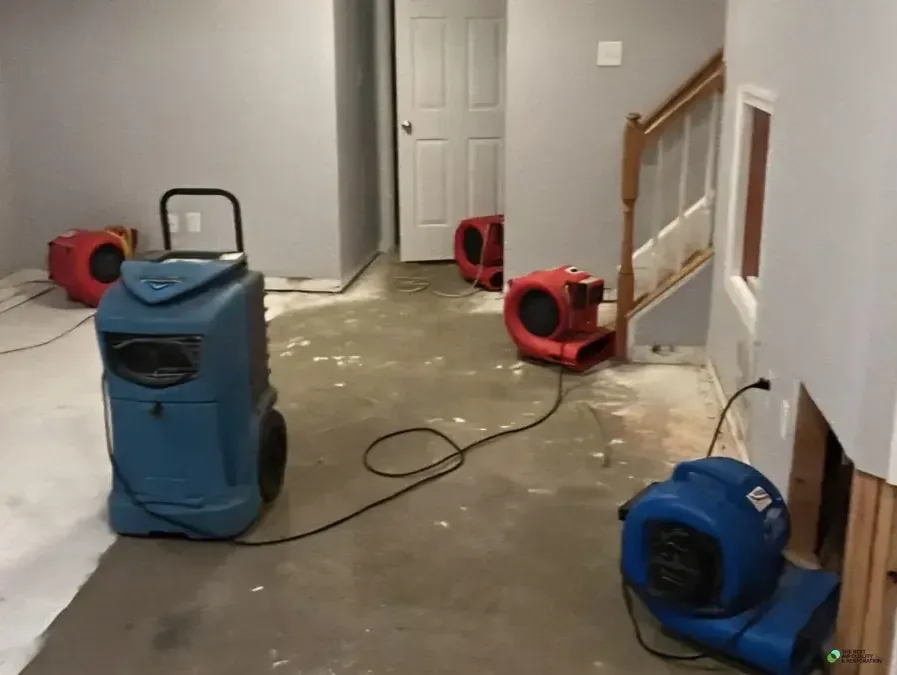
Once the leak is stopped or covered, the water already inside has to be dealt with. The restoration team opens the ceiling where it is wet and checks the attic above it.
That work belongs to roof leak water damage and ceiling leak water damage cleanup.
Insulation that stays wet loses its value and holds moisture against the ceiling, which is why it comes out when it is soaked.
Roofers and restoration teams work on different sides of the same leak. The roofer keeps rain out, and the restoration team makes sure no water is left behind in the insulation, drywall or framing.
- Wet insulation is pulled from the affected section.
- Drywall that has soaked through is cut back to dry framing.
- Fans and dehumidifiers dry the joists, the ceiling cavity and nearby walls.
- Moisture readings are repeated until the materials reach normal levels.
A simple storm season routine
A few repeat checks through the season catch most roof leaks while they are small.
- Early fall: check the roof surface, flashing and gutters.
- First storm: look in the attic and at ceilings the next morning.
- After each big storm: recheck corners, window headers and light fixtures.
- Midwinter: repeat the checks after the wettest weeks.
- Spring: look for damage the season left behind.
When the rain keeps coming
January and February bring the heaviest rain, and a roof with one weak spot can leak again with each storm. A temporary cover from a roofer buys time until a real repair.
A ceiling that has dried to the touch can still hold damp insulation above it. Opening it once is cheaper than repeated stains and repainting.
Tell the landlord or property manager at once if the home is a rental, and send photos of the stain and the roof if they can be taken safely.
Photograph a stain before painting over it. A dated photo shows how the leak progressed and helps a roofer or insurer understand it.
For more on local help, see the Rancho Cucamonga water damage hub, and the roof leak cleanup process used across the area.
Questions
When is the best time to check a roof in Rancho Cucamonga?
Before the wet season, while the weather is dry. A second look the day after the first real storm catches slow leaks early.
Can a roof leak stay hidden in the attic?
Yes. Insulation can absorb water for days before a stain reaches the ceiling, so an attic check after a storm is worthwhile.
Is a dried stain a sign the problem is over?
Not necessarily. Moisture may remain above the ceiling, and the stain can return with the next storm.
Who fixes the roof and who dries the ceiling?
A roofer repairs the roof. The restoration team removes wet material and dries the ceiling, attic and walls.
Do roof leaks need a plumber?
Only if the source turns out to be pipes or a fixture. Timing and location clues help tell which trade is needed.
How soon after a storm can a leak show up?
Water can take a day or more to travel across insulation and framing before a stain appears. A check the next morning, and again a few days later, is worth doing.