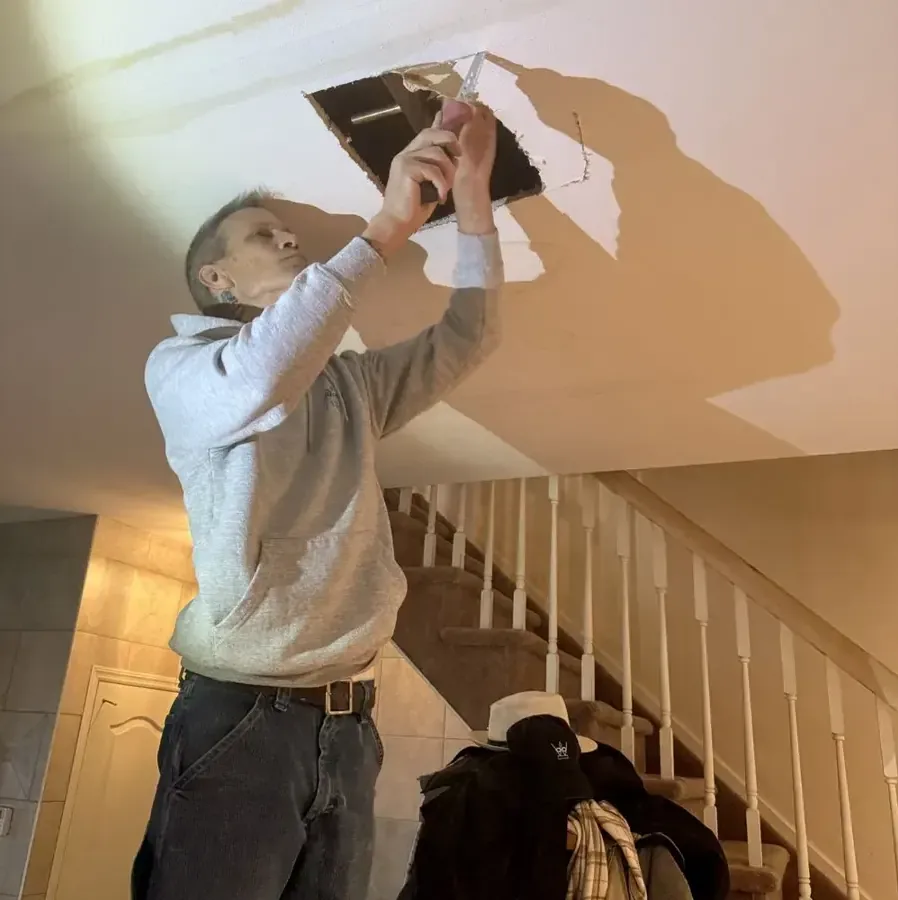
A stain spreading across a ceiling is stressful in any home, and in a rental it raises a second question: whose job is it to act? In Upland, where a large share of housing units are rented, tenants and landlords both need to move quickly.
Key takeaways
- In the 2010 census, 42.1% of Upland's 27,355 housing units were occupied by renters, so many ceiling leaks involve both an occupant and an owner.
- Tell the landlord or property manager in writing right away and keep a copy.
- Photograph the stain, the source if it is visible and anything the water touched, with dates.
- The ceiling usually has to be opened so wet insulation and joist bays can dry.
- The source can be a roof, an upstairs fixture or an air conditioner drain, and each one points to a different repair.
Why a rental turns a leak into a two party problem
Upland counted 79,040 residents in the 2020 census. A good share of them rent: the 2010 census put renter occupied units at 42.1%, and the 2020 data showed 54.6% of units owner occupied.
That split creates a gap. The tenant sees the stain but does not control the roof, the pipes or the air conditioner above it.
The landlord controls the repair but may not know anything is wrong.
Closing that gap quickly is what keeps a small leak small. Every day the ceiling stays wet, the drywall, insulation and framing above it absorb more water.
First steps for the tenant
Safety comes before anything else. A ceiling that sags or bulges can hold a surprising amount of water.
If a light fixture is filling with water, leave it alone and ask the manager to cut power to that circuit.
- Stay out from under a sagging or bulging ceiling.
- Move furniture, rugs and electronics away from the wet area.
- Set a bucket under any steady drip and cover belongings with plastic.
- Switch off the light or fan on a wet fixture, and avoid touching it.
- If water is clearly coming from a unit above, tell the manager so that unit can shut off its supply.
- Photograph everything before anything is moved or thrown out.
Common sources of ceiling leaks in rentals
Ceiling leaks in rentals trace back to a short list of causes. Knowing them helps the tenant describe the problem and the landlord send the right trade.
Most of Upland's 24.5 inches of yearly rain falls in winter, so roof leaks tend to show up when the winter storms arrive.
- A roof leak after winter rain, often near an exterior wall or on a top floor.
- An upstairs bath, kitchen or laundry where a supply hose, drain or seal has failed.
- An air conditioner drain or pan that clogs and overflows in warm weather.
- A water heater or appliance in a closet or unit above.
- A pipe inside a wall or ceiling cavity that has started to weep.
Who needs to hear about it
The landlord or property manager
Written notice is best: an email or a message through the tenant portal, with photos attached. It creates a dated record that the leak was reported and when.
Say what was seen, where, and whether the water is still coming. Ask for a time to inspect the unit and for the repair to be scheduled.
The neighbor upstairs
If the stain sits below a bathroom or kitchen, the source may be in the unit above. The manager usually handles that contact, but a polite knock can help if a tap or appliance is leaking right now.
The insurer
A tenant with renter's insurance should report damaged belongings and ask what the policy needs. The owner's policy covers the building, not the tenant's things.
What to photograph and record
Good documentation protects both sides. It shows how far the water spread and when it was reported.
- A wide shot of the room, then a close look at the stain with a coin or ruler for scale.
- The path water takes down a wall, around a light fixture or along a vent.
- Wet or damaged belongings, front and back.
- Any visible source: a dripping pipe, a drain pan, a soft patch on the ceiling.
- The date and time on every photo, plus a short note on what was noticed first.
How the ceiling is opened and dried
Finding the source
A ceiling leak comes from a roof, an upstairs plumbing fixture or an air conditioner drain, and the timing helps tell which. A stain that grows only during rain points to the roof, while one that appears after a shower points to the bath above.
The restoration team uses moisture meters to see how far the water traveled. A plumber, roofer or air conditioner technician fixes the source.
Opening and drying
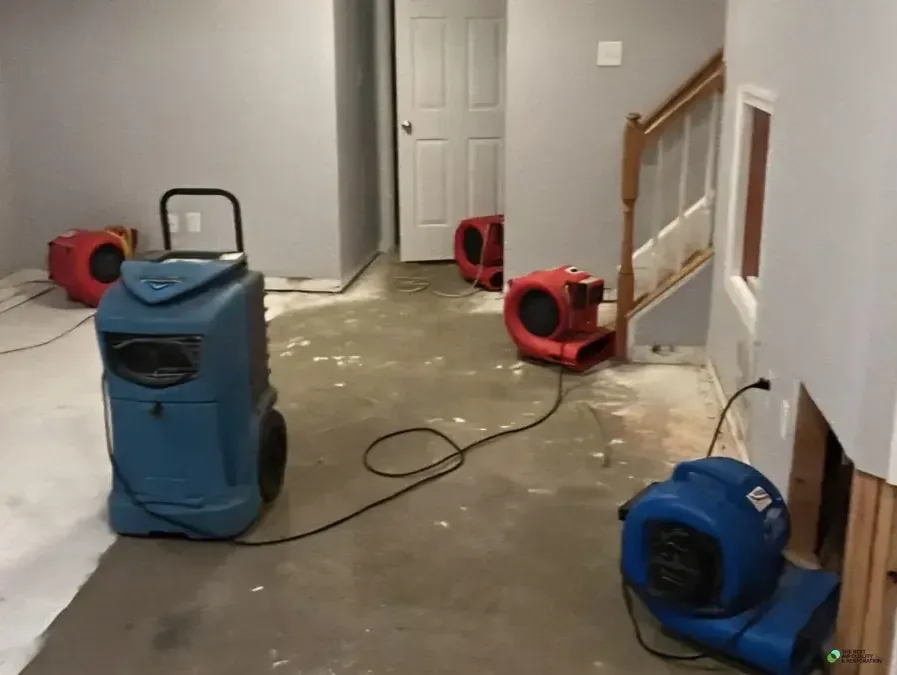
Drywall that has soaked through is cut back to dry framing, and wet insulation is removed. Fans and dehumidifiers then dry the joist bays and the surrounding walls.
That is the work behind ceiling leak water damage repairs. If water also reached the floor, water extraction comes first.
Keeping the paper trail
Tenants and landlords both benefit from a clear record: the first message, the photos, the inspection date, the cause and the repair. If the cause turns out to be a neighbor's fixture or a shared roof, the record helps sort out who pays.
The drying team's moisture logs add an objective timeline. They show when the materials were wet and when they were dry.
More on local help is on the Upland water damage hub, and the same ceiling leak cleanup steps apply across the area.
Owners of small rental buildings benefit from the same record when they speak with an insurer or a contractor.
A short written summary at the end, listing dates and what was done, is a useful close to the file.
Questions
Who pays for a ceiling leak repair in a rental?
That depends on the lease, the cause and the policies involved. A dated record of the first notice and photos helps whoever sorts it out.
Can a tenant call a restoration team directly?
Many tenants notify the landlord first, because the owner controls the building. In an emergency, a tenant can ask the manager for permission to start extraction.
Does a small brown ring mean a big problem?
A small ring can hide a lot of wet insulation above it. Moisture readings show whether the ceiling needs to be opened.
Is it safe to stay in a room with a wet ceiling?
Avoid the area under a sagging ceiling and keep power off to wet fixtures. Other rooms are usually fine.
What if the leak comes from the unit upstairs?
The manager contacts the upstairs resident and arranges for the supply to be shut off. The record of photos and notices applies to both units.
How long can a ceiling stay wet before it causes trouble?
Mold can begin within 24 to 48 hours in damp drywall and insulation, which is why a quick report and a quick drying plan matter.