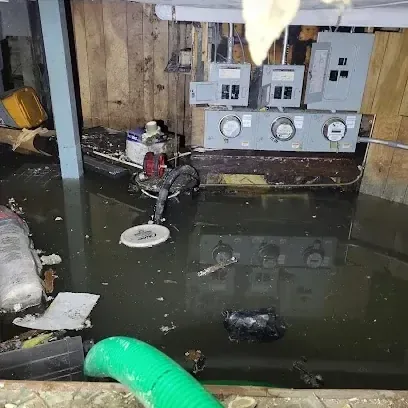
When sewage comes up through a toilet, tub or floor drain, there are two jobs at once: tell the right utility, and stop the contaminated water from soaking into the house. In Ontario, the city has a clear instruction for the first, and the second is a cleanup with strict handling.
Key takeaways
- The Ontario Municipal Utilities Company handles the city's wastewater collection and drinking water distribution.
- The city asks residents to report a sewer spill immediately, and after hours through police dispatch.
- Sewage inside a house is Category 3 water: porous materials that touched it are removed, and surfaces are cleaned and treated.
- Nothing in the public record settles who owns the sewer lateral, so reporting the backup and documenting it are the safest first moves.
- AlertOntario and ReadyOntario are the city's channels for wider emergency information.
Who handles sewer spills in Ontario
The Ontario Municipal Utilities Company, known as OMUC, handles production, transmission and distribution of the city's domestic water supply. It also handles wastewater collection.
The city asks residents to report a sewer spill immediately to Ontario Municipal Utilities. After hours, the report goes through police dispatch.
A backup that surfaces inside a house may involve the city's sewer or the pipe on the private side, and a report lets the utility look at its side first.
Residents who are unsure which side of the system a problem is on should still make the report, because the utility can sort that out faster than a household can.
What to say when reporting a backup
A clear report speeds up the response from the utility and gives the cleanup crew a better starting picture.
Having these details ready also helps if the utility asks follow up questions or sends a crew to check the main.
- The address and the room or fixture where sewage is coming up.
- Whether toilets, tubs, sinks and floor drains are all affected or only one.
- When the problem began and whether it has stopped or is still rising.
- Whether neighbors report the same problem, which can suggest the main is involved.
- Photos of the affected areas, taken from a safe distance and without touching anything.
Why sewage is handled as contaminated water
Water that comes up from a sewer carries bacteria and other contaminants. That puts it in Category 3, the most serious class of water damage.
Gloves, boots and protective suits are the basics for crews. Household members, especially children, older adults and pets, should stay out of the affected rooms.
Do not use affected toilets, tubs or sinks while the backup is active. Running more water can push more sewage into the house.
Between the first report and the start of cleanup, the priority is keeping people and pets away from the contamination.
A few small habits keep a bad situation from spreading.
- Keep everyone out of the affected rooms, especially children, older adults and pets.
- Skip the dishwasher, washer and showers, because extra water goes down the same drains.
- Switch off power to rooms where water reaches outlets, only if the panel is dry and easy to reach.
- Open a window if the smell is strong and the weather allows.
- Leave household vacuums alone, because they spread contamination.
What the cleanup removes and what it treats
Materials that are removed
Porous items that soaked up sewage rarely come clean. Crews cut them out, bag them and haul them away.
- Carpet and carpet pad in the wet area.
- The bottom strip of drywall and insulation inside affected walls.
- Cabinet kick plates and particleboard that swelled.
- Soaked rugs, cardboard boxes and stored paper.
Surfaces that are cleaned and dried
Hard surfaces such as tile, concrete and sealed wood are cleaned and then treated with an antimicrobial product.
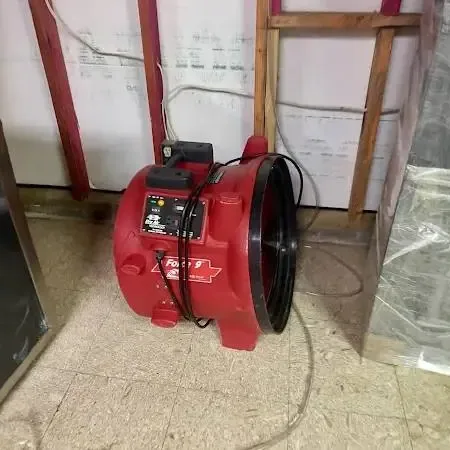
Once the contaminated materials are out, the structure is dried with fans and dehumidifiers. See the local sewage backup cleanup work for the full sequence.
A final round of moisture readings confirms that the treated surfaces and the framing behind them have returned to normal levels.
Houses, rental units and businesses
A single family house, a rental unit and a business each handle a backup a little differently.
In a house, the owner decides on the cleanup and any plumbing repair. In an apartment, the tenant notifies the manager and photographs what the water touched.
A business protects stock, records and customers, and closes affected restrooms until the area is treated.
Condominium and townhome owners should also tell the association or manager, since a backup in one unit can come from a drain shared with others.
Extraction, drying and why the first day matters
Standing sewage water is pumped or vacuumed out first. This is the same water extraction equipment used for clean water, but it is handled with different protective steps.
After extraction, readings map where moisture remains, and the drying equipment is placed to reach those spots.
Sewage that sits in carpet and drywall keeps spreading as it wicks upward. The faster porous materials are removed, the smaller the affected area ends up.
Crews also ventilate the rooms during removal and seal the work zone from clean parts of the house with plastic sheeting. A final check with moisture meters confirms the area is dry before any rebuilding starts.
Standing water is only part of the picture. Odors, splashes on walls and water pushed into floor seams all need attention before the area is called clean.
Staying informed and keeping records
The city sends AlertOntario notices about evacuations and road closures, runs the ReadyOntario preparedness hub and offers Community Emergency Response Team training.
Across the city, 45.3% of occupied homes are rented, so many backups involve a tenant and an owner. Tenants should tell the landlord or manager in writing and keep dated photos.
Owners should keep the utility report details, photos and cleanup records for the insurer. The same sewage backup cleanup steps are used across neighboring cities.
A short written summary of what was reported, when and to whom, keeps the household and any landlord on the same footing.
Questions
Who should be told first about a sewage backup?
The city asks residents to report a sewer spill immediately to its municipal utility, and after hours through police dispatch.
Who owns the sewer lateral?
That is not settled in the information available here. Reporting the backup and keeping photos protects the household whichever way it turns out.
Can a household clean up a sewage backup alone?
Contaminated water carries health risks, and porous materials have to be removed and bagged. A restoration team has the protective gear and the equipment to do it safely.
Why are carpet and drywall removed instead of dried?
Porous materials hold contaminants that drying does not remove. Cutting them out is the more reliable path.
Does the cleanup cover just the room where sewage came up?
It covers every area the water reached. The crew uses moisture readings to follow the water into adjoining rooms and wall cavities.
Can the household stay in the house during cleanup?
Often yes for rooms the water did not reach, but the affected rooms stay off limits until they are treated. The crew explains which areas are safe after assessing how far the water spread.