
In a distribution building, the water is only half the problem. The other half is the stock on the floor, the schedule at the dock and the customers waiting on a shipment.
Key takeaways
- Ontario's economy is dominated by service industries and warehousing, with major distribution centers across the city.
- Ontario International Airport is the largest employer and ranked 8th among US airports for cargo as of 2026, with UPS and FedEx among the other top employers.
- The first moves are to stop the source and lift stock, pallets and electronics off wet floors.
- Large floors are dried in zones so part of the building can keep working.
- Retail space and event venues need their doors open, so phased drying matters there as well.
Why warehouse water damage is a stock problem first
Ontario has long been a freight city. Its economy is dominated by service industries and warehousing, and the airport handles freight between the ports of Los Angeles and Long Beach and the rest of the country.
Ontario International Airport was the 8th busiest US airport by cargo carried as of 2026, and UPS and FedEx are among the city's top employers.
In buildings like that, a wet floor can mean spoiled inventory, delayed shipments and idle crews. The cleanup plan has to protect all of it, not just the concrete.
A pallet of cardboard cartons sitting in an inch of water will wick moisture up its sides quickly, so the stock often matters more than the floor.
Distribution buildings are big, with long clear spans and few interior walls, so water can spread across a wide area before anyone notices.
First moves for a facility manager
The first decisions come fast. A calm checklist keeps the loss from growing.
Coordination matters as much as speed. One person should hold the record of who was told, what was moved and which areas are closed.
- Stop the source: close the valve, shut the sprinkler zone or tarp the roof opening.
- Cut power to wet outlets, panels and charging stations, and keep forklifts out of the water.
- Lift stock, pallets and electronics onto blocks or racks above the wet floor.
- Photograph the water, the damaged goods and the affected racking before anything moves.
- Tell the building owner, the landlord and the insurer in writing.
- Decide which doors and aisles must stay open for shipments.
- Tell night and weekend staff what is closed and why.
Drying large floors in zones
Mapping the wet area
Moisture meters and thermal cameras trace where water went. On a big slab, it can travel well past the visible puddle, under racking and along expansion joints.
Standing water goes first. Water extraction with truck mounted or large portable units clears the open floor before drying begins.
Moisture mapping is repeated during the job, not just at the start, because different parts of a big floor dry at different speeds.
Phasing the work
A large building does not have to stop all at once. The drying team divides the floor into zones, dries one and clears it for use, then moves equipment to the next.
Walls, dock offices and mezzanine floors are handled alongside the main slab. This is the core of structural drying in a commercial building.
Drying a large open building means controlling humidity in the whole space, not only the wet patch. Dehumidifiers pull moisture from the air so the slab and walls can release theirs.
Protecting stock while the floor dries
Stock protection is time sensitive. The order in which goods are moved decides how much is saved.
A little labeling during the move saves a lot of arguing afterward.
Insurers and customers often ask for a loss list, so a running tally on a clipboard or tablet is worth keeping as the stock moves.
- Move sealed goods first, then cartons, then loose paper goods.
- Keep damaged and undamaged stock apart and label each pallet.
- Count and photograph what was lost before anything is thrown away.
- Check contract terms with carriers, suppliers and customers about damaged goods.
- Keep temperature sensitive goods away from warm, humid areas.
Retail floors and event spaces
Ontario Mills opened on November 14, 1996, and the Ontario Convention Center opened in 1997. Places like these cannot close for long.
A retail tenant or event manager usually needs a plan for the visitor entrance, the loading route and the area that must be roped off.
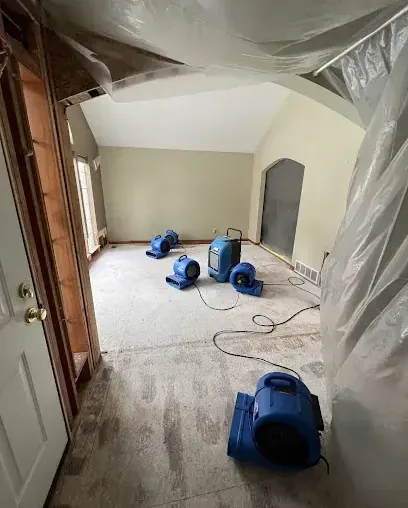
Phased drying, quiet equipment placement and clear signage let customers and exhibitors keep moving while the wet area is treated.
Foot traffic changes the plan. Wet floors in a public space need warning signs, dry walkways and a clear path to exits, and cords and hoses are routed so nobody trips.
Where the water usually comes from
Commercial leaks have their own favorite sources. Knowing them speeds up the search.
Hidden sources matter too. Water that enters at a wall base can look like a roof leak, and a leaking pipe above a drop ceiling can drip onto stock for days before anyone looks up.
A leak that starts on a weekend, when nobody is on the floor, can run for a long stretch. A walk through the building after any storm is a cheap habit.
- Roof drains and flashing that fail under heavy rain.
- Rooftop units whose condensate drains clog.
- Fire protection pipes and sprinkler heads that leak or discharge.
- Restroom, breakroom and office plumbing.
- Storm runoff coming under dock doors and roll up doors.
Records for tenants, landlords and insurers
A commercial loss usually involves several parties: the tenant, the owner, the property manager and one or more insurers. A clear file keeps them aligned.
That file should include dated photos, an inventory of affected stock, moisture readings and the equipment log from the drying team.
For businesses elsewhere in the area, the same commercial water damage approach applies, and the business water damage response process is similar.
Many commercial leases spell out who repairs what, so the lease is worth reading before the first call to the landlord.
A short daily update from the drying team, with readings and next steps, keeps managers informed without long meetings.
Questions
Can a warehouse keep operating during drying?
Often partly. The drying team works in zones, so unaffected areas and clear aisles can keep shipping while wet areas are treated.
Is stock on a wet floor always a loss?
Not always. Sealed goods on pallets lifted early may be fine, while cardboard and paper goods usually soak up water fast.
Who should be told first after a commercial water loss?
The building owner or property manager, then the insurer. Written notice with photos creates a clear record.
How are large concrete floors dried?
Water is extracted first. Then dehumidifiers and air movers run while moisture readings track progress until the slab reaches normal levels.
Does a retail store need to close for water cleanup?
Usually only the affected area. Phased work lets the rest of the store stay open when conditions are safe.
What happens to wet pallets and racking?
Wood pallets can be dried or replaced, and steel racking is cleaned and wiped dry. Particleboard shelving and cardboard separators are usually discarded.