Storm Runoff and Flash Flood Cleanup in Chino, CA
When heavy rain pushes runoff into a garage, hallway or ground-floor room, the response team extracts the water, clears the mud and debris, and dries what the storm soaked.
(888) 578-6508Get help with storm water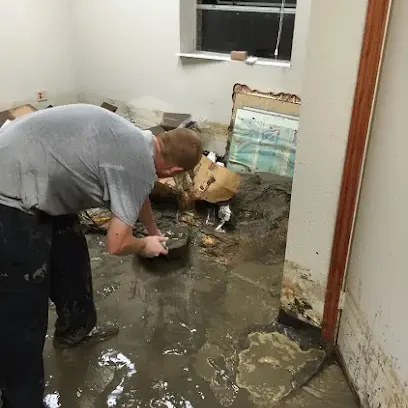
Storm water carries mud, silt and debris into a building, so a runoff job is more than wet floors. In August 2023 Hilary brought continuous rain to Chino, and while the city called it milder than expected, flooded-road closures on San Antonio Avenue, Pine Avenue and Merrill Avenue showed how fast water collects.
First steps for storm runoff and flash flood cleanup in Chino
Cut the power
Turn off breakers to flooded rooms before anyone goes in.
Protect valuables
Lift documents, electronics and keepsakes onto high shelves.
Photograph the damage
Capture the depth and mud marks on walls before cleanup.
Call the crew
Tell the crew how many rooms flooded and whether mud came in.
Before and during the storm
Residents who expect runoff can place sandbags at doors and garage openings. During Hilary the city and the fire district distributed over 5,500 sandbags and asked residents to bring their own, because fire station supply was limited.
- Sandbags at doors and garage openings
- Chino Notify alerts for city updates
- Photos of the property before the storm
- Valuables lifted off ground-level floors
Water spreading while you read?
Storm runoff cleanup combines water extraction with removal of mud, silt and debris, cleaning of affected surfaces and structural drying, since flood water usually carries contamination from outside.
What the cleanup involves
The extraction crew pumps out standing water, shovels or vacuums mud and silt, and removes ruined pad, drywall and insulation. Surfaces that stay are cleaned before the drying equipment goes in.
- Extraction of standing water
- Mud, silt and debris cleared out
- Soaked pad and drywall removed
- Surfaces cleaned before drying
Why flood water is treated as contaminated
Runoff picks up whatever it crosses on the way to a building, so storm water is handled with protective gear and more removal than a clean pipe leak. Water extraction comes first, then drying.
- Porous materials removed more often
- Hard surfaces cleaned and treated
- Drying only after cleaning is done
Official reading: Ready.gov flood safety and FloodSmart, the National Flood Insurance Program.
What does storm runoff and flash flood cleanup cost in Chino, CA?
Storm runoff and flash flood cleanup in Chino often costs $2,500 to $5,000 for a garage or one room, $5,000 to $9,000 for several rooms and $9,000 to $14,000 or more for most of a house, depending on mud, depth and materials.
- Extraction and mud removal
- Cleaning of surfaces
- Drying equipment
- Pad and drywall removal
- Multi-room drying
- Daily readings
- Whole-floor extraction
- Insulation and cabinet work
- Full documentation
Ranges are typical, not a quote: water category, square footage, material class and how fast drying started move the number most.
Work out your own range on the cost calculator ›How storm runoff and flash flood cleanup is handled in Chino
Every job starts with a moisture map, so the drying plan matches what is actually wet. Equipment stays until the readings say dry, not until the surface looks dry.
Extract
Pumps clear the standing water.
Clear
Mud, silt and debris are removed.
Clean
Surfaces that stay are cleaned.
Dry
Equipment runs until readings are normal.
Storm runoff and flash flood cleanup across Chino and nearby cities
The response team works across Chino, including streets near the creek that drains toward the Prado Flood Control Basin and the new-home neighborhoods of The Preserve at Chino. Garages and ground floors are the usual starting points. Browse the full service area or the town hub.
The same service nearby: storm runoff and flash flood cleanup in Montclair, Ontario, Upland.
Storm Runoff and Flash Flood Cleanup questions in Chino, CA
01Did Hilary flood homes in the city?
That is not confirmed. The city called the storm milder than expected, and the closures it listed were roads that reopened by the morning of August 21. Any property that did take on water should still be dried quickly.
02Is storm water considered contaminated?
Usually yes. Runoff crosses streets, yards and drains before it reaches a building, so the crew treats it as gray or black water, removes porous materials and cleans surfaces before drying.
03Are sandbags enough to keep water out?
Sandbags help at doors and garage openings, but they do not stop water that rises through floor seams or drains. When water gets in anyway, extraction limits how far it spreads.
04What about mud and silt?
Mud and silt dry into a crust that is hard to clean, so the crew removes it while it is still soft. Flooring and drywall that stayed muddy are usually replaced rather than saved.
05How does cleanup change if the garage floods?
A garage floor dries quickly once the water is extracted, while stored boxes, drywall at the base and any attached rooms need a closer check. Wet framing is covered under structural drying.
Storm water carries more than rain
Tell the response team where the runoff entered and how far it traveled, and the cleanup plan can be built from that.
(888) 578-6508Clear out the storm water