Water Extraction in Rancho Cucamonga, CA
Standing water from a failed supply pipe, an appliance or a winter storm is pulled out first, then the structure is dried, because wet pad and drywall keep absorbing whatever is left behind.
(888) 578-6508Start water removal for my floors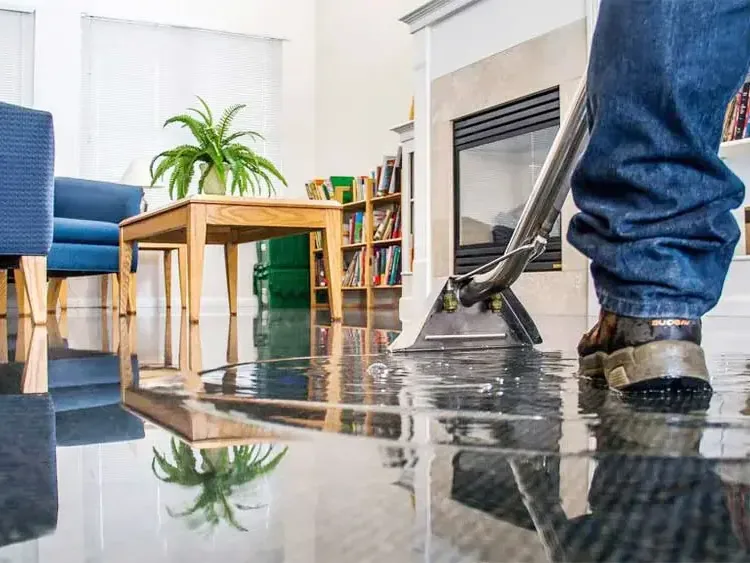
Every hour that water sits on a floor, more of it wicks into pad, baseboards and the bottom of the drywall. The extraction crew removes the bulk first, so the drying equipment that follows has far less water to fight. A quick start also keeps the structural drying service shorter.
First steps for water extraction and removal in Rancho Cucamonga
Stop the source
Close the fixture shutoff or the main valve if it is safe to reach.
Stay clear of power
Keep away from wet outlets, cords and appliances sitting in water.
Lift small items
Move rugs, shoes and electronics out of the wet area.
Photograph first
Take photos and video of the water and its source before removal.
How the extraction is done
Truck-mounted units handle large volumes, while portable extractors and wands reach closets, stairs and tight corners. Carpet is lifted and the pad is checked, since soaked pad usually cannot be saved. A final pass with a moisture meter confirms that no pools remain under cabinets or in low corners.
- Wet pad is cut out and removed
- Hardwood and laminate are checked for cupping
- Standing water is metered before and after
- Baseboards come off where water has wicked
Water spreading while you read?
Truck-mounted and portable extraction lifts standing water off floors, and meters then show how far moisture traveled so drying can start where it is actually needed.
What decides the next step
Clean water from a supply pipe is treated differently from gray or contaminated water, and the category sets which materials can stay.
- Clean water allows more salvage
- Gray water means pad and porous trim go
- Sewage moves to a protective cleanup
- A thermal camera finds hidden wet pockets
Why winter keeps crews busy
January averages 4.16 inches of rain and February 5.14, the two wettest months here, so garages and ground-floor rooms take on storm water then. Pipe and appliance failures add water losses all year.
- Garages and entries see runoff first
- Rooms near exterior doors follow
- Supply failures flood kitchens and baths
- Quick removal limits the drying work
Official reading: EPA indoor air quality basics and California Department of Insurance.
What does water extraction and removal cost in Rancho Cucamonga, CA?
Water extraction with follow-up drying in Rancho Cucamonga typically runs $900 to $7,500, depending on how many rooms are wet, the water category and the flooring. Carpet with clean water sits at the low end.
- Wand extraction of the room
- Wet pad inspected
- Initial drying setup
- Truck-mounted units on site
- Wet baseboards pulled
- More dehumidifier capacity
- Pad and porous trim discarded
- Surfaces cleaned and treated
- A longer equipment stay
Ranges are typical, not a quote: water category, square footage, material class and how fast drying started move the number most.
Work out your own range on the cost calculator ›How water extraction and removal is handled in Rancho Cucamonga
Every job starts with a moisture map, so the drying plan matches what is actually wet. Equipment stays until the readings say dry, not until the surface looks dry.
Assess
Water category and source are identified first.
Extract
Wands and pumps lift every pool of standing water.
Remove
Soaked pad, trim and insulation come out.
Dry
Equipment is placed and daily readings begin.
Water extraction and removal across Rancho Cucamonga and nearby cities
Extraction work runs across Rancho Cucamonga, from homes in Alta Loma, Etiwanda and Terra Vista to offices off Haven Avenue and warehouses around Milliken Avenue, with crews reaching Foothill Boulevard and the Victoria Gardens area.
The same service nearby: water extraction and removal in Montclair, Upland, Ontario.
Water damage restoration in Rancho Cucamonga · every city covered
Related water damage services in Rancho Cucamonga
Water Extraction and Removal questions in Rancho Cucamonga, CA
01How soon should standing water be removed?
As early as possible, because pad, baseboards and drywall start absorbing within hours. Mold can begin to grow in 24 to 48 hours, so removal and drying should not wait.
02Can wet carpet be saved after extraction?
Often, when the water was clean and extraction happened quickly. Pad usually has to go, while the carpet itself can be lifted, dried and reset. Gray or sewage water changes that answer.
03Does extraction include drying?
Extraction removes the bulk of the water. Drying is a separate step with air movers and dehumidifiers, and the structural drying service continues until readings return to normal.
04What if the water came from a storm?
Storm water can carry soil and debris, so the crew treats it as contaminated until it is cleaned. The storm and runoff cleanup service covers garages and ground-floor rooms.
05Will hidden moisture be checked?
Yes. A thermal camera and moisture meter scan walls and floors beyond the visible wet area, because water often travels farther than it appears.
06Is water extraction covered by insurance?
Sudden events like a burst pipe or a failed hose are often covered, though policies differ. Photos, readings and invoices from the extraction help the claim move forward.
Get the water out before it spreads
Wet pad and drywall keep absorbing water until it is removed. Call any hour and the crew will plan the equipment your floors need.
(888) 578-6508Call for extraction